

The Calculus Universe
Calculus, the mathematical study of continuous change, was originally called the calculus of infinitesimals or infinitesimal calculus. Its two primary branches are differential calculus and integral calculus.
The first branch analyzes instantaneous rates of change and the slopes of curves, while the second analyses accumulation of quantities/small changes and areas under/between curves.
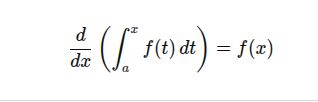
The fundamental theorem of calculus links both branches together.
This theorem connects derivatives and integrals:
Differentiation and integration are inverse processes.
Symbolically:
Calculus is the branch of mathematics that studies change, motion, and accumulation. It answers questions like:
- How fast is something changing right now?
- How much has something accumulated over time?
- What is the area under a curve?
- How can we optimize a quantity—make it maximum or minimum?
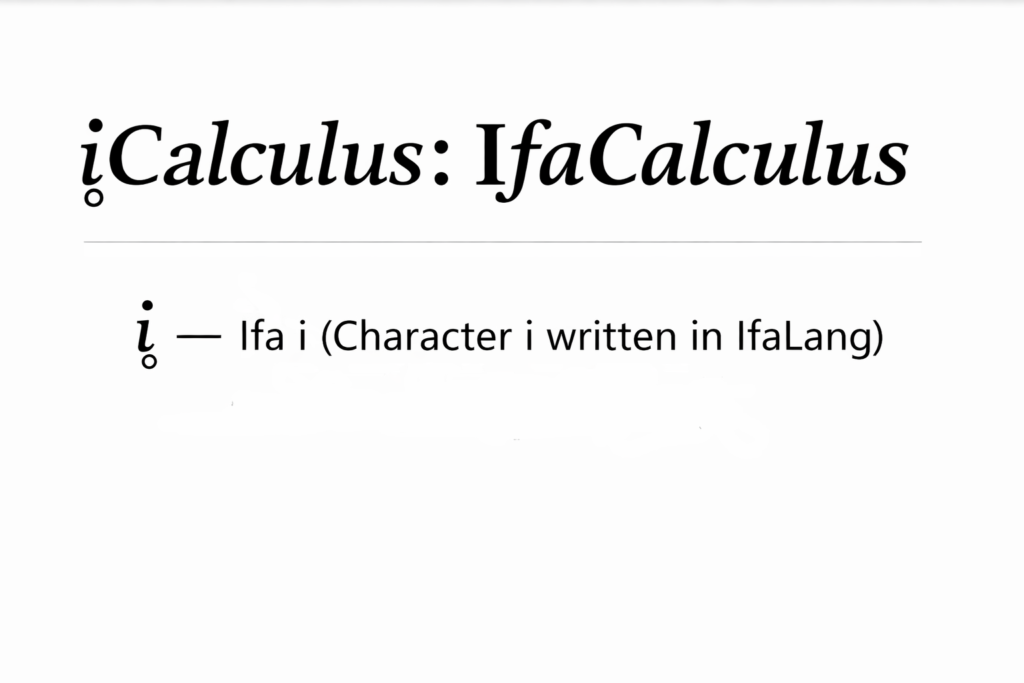
Ifa Calculus is Universal Calculus or General Calculus in the IFA Body of Knowledge (IFABOK) for studying change or transformation in all ways or forms that it manifests or occurs.
It is also known as Consciousness Calculus, ToE Calculus, General Calculus, Energy Calculus, Ifa Knowledge Calculus, the Calculus of Everything (CalcoE), or IfaCalc.
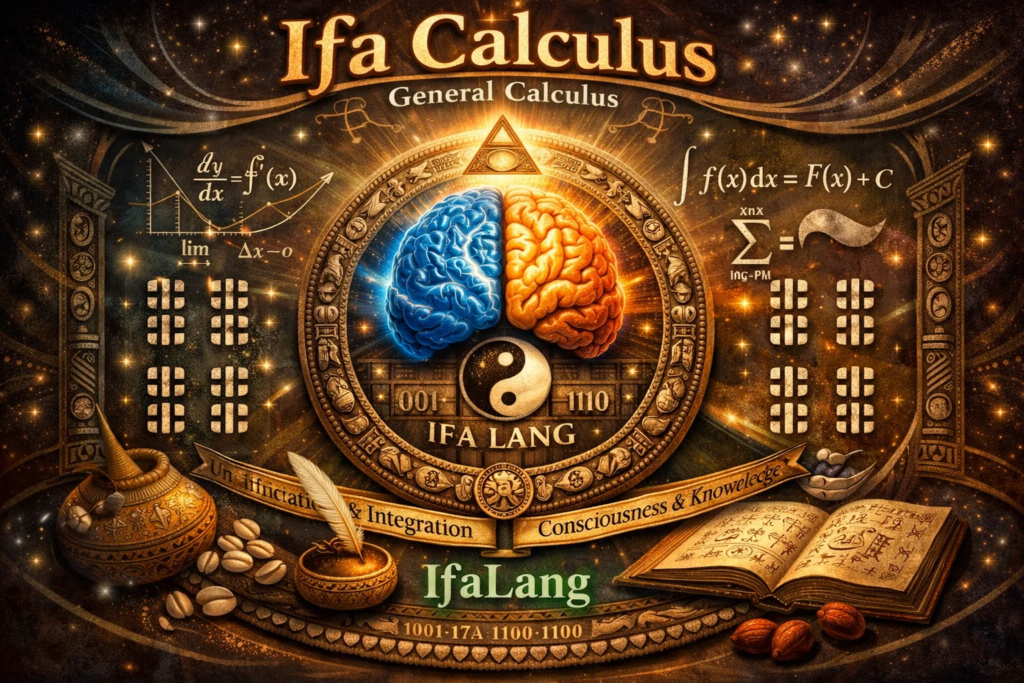
IfaCalc is the container and fundamental building block of all theories, models, and approaches to calculus in any field of knowledge, especially Mathematics.
Below is a comprehensive map of types of calculus across different fields, such as Mathematics, Computer Science, Economics, Ethics and Moral Philosophy, and others, showing how each discipline uses the idea of continuous change, accumulation, or rule-based reasoning to build its own version of calculus.
1. In Mathematics (Core Calculus)
a. Differential Calculus
- Studies instantaneous rates of change.
- Centerpiece: derivative.
- Applications: motion, slopes, optimization.
b. Integral Calculus
- Studies accumulation: areas, volumes, total quantities.
- Centerpiece: integral.
c. Multivariable Calculus
- Extends derivatives/integrals to functions of many variables.
- Includes gradients, divergence, curl.
d. Vector Calculus
- Calculus applied to vector fields.
- Includes line integrals, surface integrals, Stokes’ theorems.
e. Calculus of Variations
- Finds functions that optimize a quantity (e.g., shortest path).
- Used in physics, mechanics, machine learning.
f. Tensor Calculus
- Generalizes calculus to curved space.
- Foundation of general relativity.
g. Fractional Calculus
- Derivatives and integrals of non-integer order.
- Used in memory systems, anomalous diffusion, control theory.
2. In Computer Science
a. Lambda Calculus
- A formal system for defining computable functions.
- Foundation of programming languages (Haskell, Lisp, etc.).
- Based on:
- variable binding
- abstraction
- function application
b. Process Calculus (Process Algebras)
- Models systems that evolve over time.
- Types:
- π-calculus (dynamic communication)
- CSP (synchronous communication)
- CCS (interaction processes)
- Used for:
- concurrency
- distributed systems
- protocol verification
c. Calculus of Constructions
- A type-theoretic foundation for proof assistants (Coq).
- Combines lambda calculus + logic.
d. Calculus of Communicating Systems
- Describes complex message-passing systems.
e. μ-Calculus (Modal mu-Calculus)
- Logic for expressing properties of state-transition systems.
- Widely used in model checking.
f. Category-Theoretic Calculi
- Diagrammatic reasoning, monads, functors.
3. In Economics
a. Differential Calculus in Economics
- Used to compute:
- marginal cost
- marginal revenue
- elasticity
- optimal production
b. Integral Calculus in Economics
- Used to calculate:
- consumer surplus
- producer surplus
- total cost functions
- accumulated wealth
c. Functional Calculus (Dynamic Optimization)
- Used for maximizing utility over time.
- Includes:
- Euler–Lagrange equations
- Hamiltonian methods
d. Calculus of Variations in Economics
- Used in:
- optimal control
- Ramsey growth models
e. Stochastic Calculus (Ito Calculus)
- Models randomness in financial markets.
- Used for:
- options pricing
- Black-Scholes model
- risk modeling
f. Matrix Calculus
- Used in econometrics to manipulate large models.
- Critical for machine-learning-based economic modeling.
4. In Ethics and Moral Philosophy
Here “calculus” means a systematic method of weighing consequences, duties, or utilities.
a. Bentham’s Hedonic Calculus
- Jeremy Bentham’s method for evaluating moral actions.
- Measures:
- intensity
- duration
- certainty
- fecundity
- purity
- extent
b. Utilitarian Calculus
- Weighs total happiness vs. suffering.
- Used in:
- policy decisions
- resource allocation
- AI ethics
c. Risk–Benefit Calculus
- Ethical decision-making in medicine, law, policy.
- Quantifies:
- expected harm
- expected benefit
- probability-weighted outcomes
d. Deontic Calculus
- A formal calculus for moral rules:
- obligations
- permissions
- prohibitions
e. Game-Theoretic Ethical Calculus
- Uses payoff matrices to analyze moral dilemmas:
- prisoner’s dilemma
- tragedy of the commons
- AI alignment
5. In Logic and Philosophy
These “calculi” refer to formal reasoning systems.
a. Propositional Calculus
- Logic using propositions and connectives (∧, ∨, ¬, →).
b. Predicate Calculus
- Logic with quantifiers (∀, ∃).
c. Modal Calculus
- Logic involving possibility/necessity.
d. Sequent Calculus
- A proof system used in mathematical logic.
e. Temporal Calculus
- Logic reasoning about events in time.
6. In Physics
a. Classical Calculus (Newton–Leibniz)
- Motion, waves, thermodynamics.
b. Tensor Calculus
- Used for general relativity.
c. Quantum Calculus (q-calculus)
- Calculus without limits.
- Used in quantum groups and noncommutative geometry.
d. Stochastic Calculus
- Used in statistical mechanics.
e. Path Integral Calculus
- Feynman’s integral over all possible paths.
7. In Biology & Medicine
a. Population Calculus
- Models growth/decay of species.
b. Epidemiological Calculus
- Models infectious disease spread (differential equations).
c. Pharmacokinetic Calculus
- Drug absorption, distribution, metabolism.
d. Neural Calculus
- Modeling neuron firing as differential systems.
8. In Engineering
a. Control Calculus
- Systems that require regulation (PID control, optimal control).
b. Signal Calculus
- Fourier and Laplace calculus.
c. Structural Calculus
- Stress-strain differential models.
9. In Everyday Language
People sometimes say “a calculus” to mean:
a. A system of reasoning
(“The political calculus behind the decision”)
b. A weighing of options
(“A risk–reward calculus”)
The Universe of Transforms
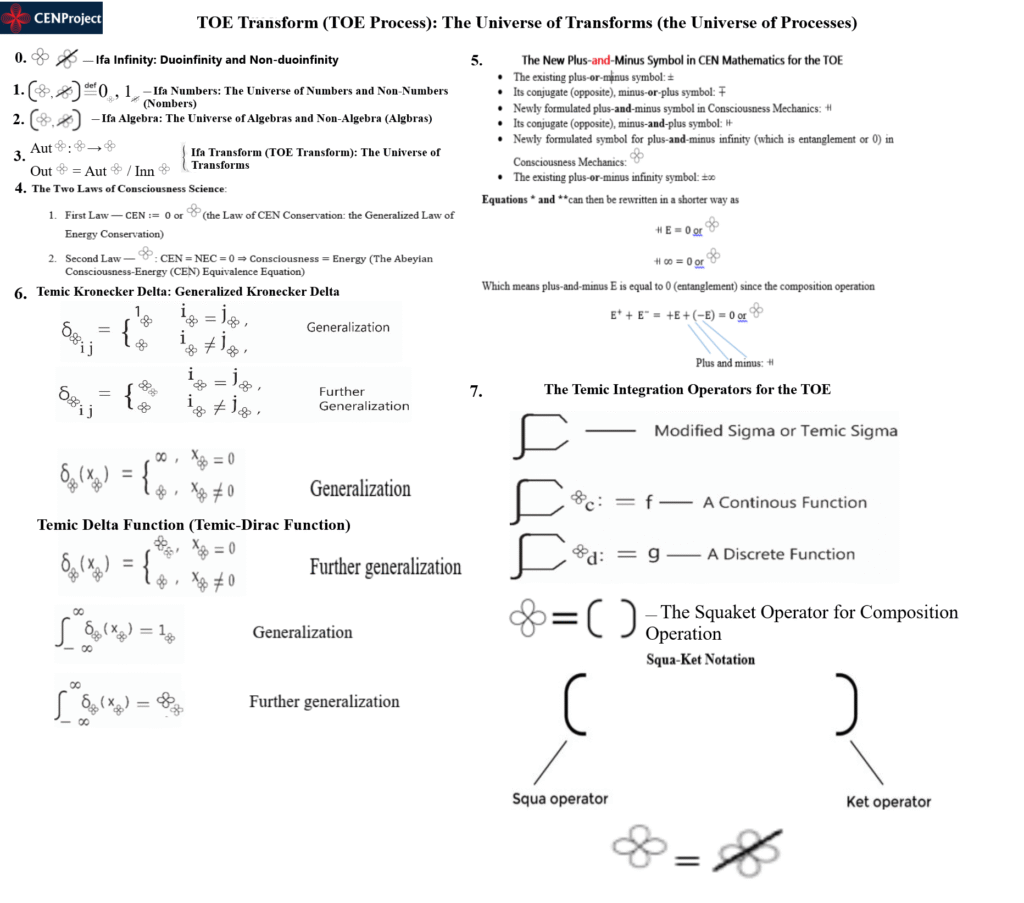
The Ifa Transform is the container and fundamental building block of all transforms/transformations, processes, and operations in Mathematics, Physics, and all other fields. It is based on the 16 Ifa Axioms and IFABit, unifying all fields of knowledge via a holistic and interdisciplinary approach.

Universal Analytical Framework
Serves as a robust technology for analyzing transformation and change across diverse disciplines, enhancing clarity and integration.

Interdisciplinary Calculus
IfaCalc is an interdisciplinary field whose Principles (the 16 Major Odu Ifa) cut across all fields, especially mathematics, physics, computer science, economics, and ethics.

Crucial IDR Tool
Serves as the Unifying Theory or Standard Model of Calculus in IFABOK that supports and connects various calculus methods and practices for comprehensive understanding and deep interdisciplinary research (IDR).
IfaDifferintegral: The World of Differintegrals
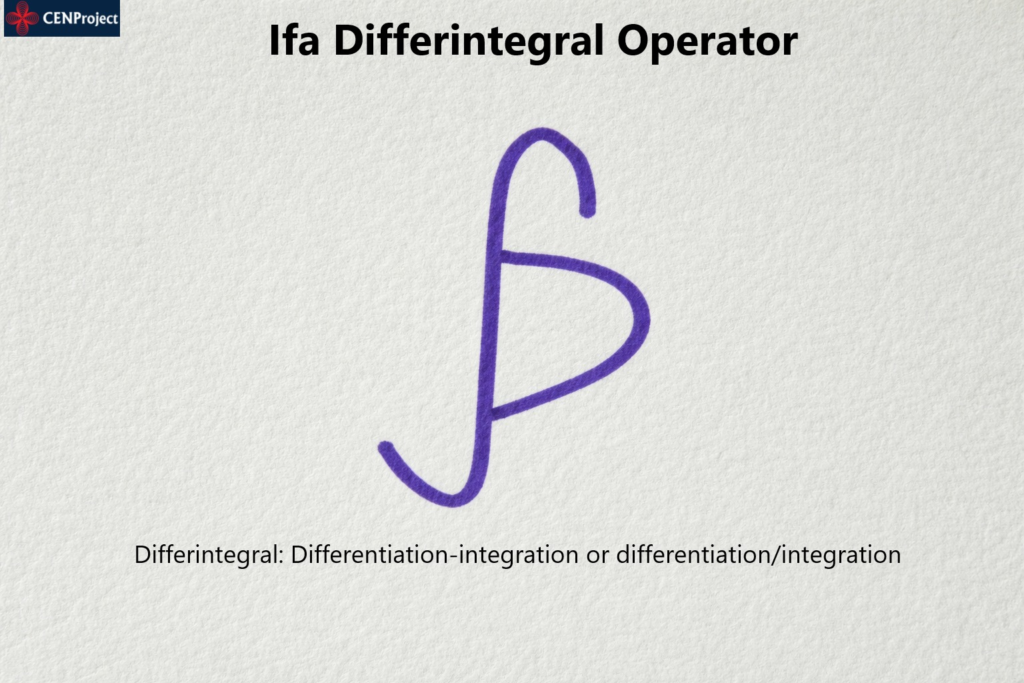
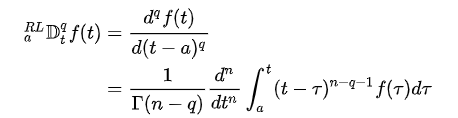
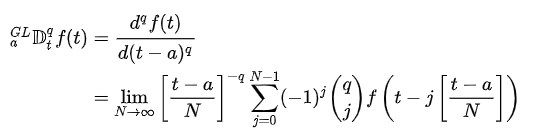
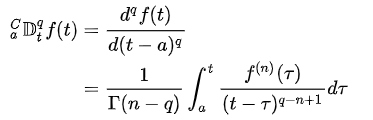
In Ifa Fractional Calculus (fractional calculus done in Ifa Language), Ifa Differintegral uses Energy (Ogbe) to unify and integrate all kinds of differintegrals in mathematical analysis, especially fractional calculus, including the Riemann–Liouville differintegral, the Grunwald–Letnikov differintegral, the Weyl differintegral, the Caputo differintegral, and others.
Explore the Foundations of Calculus in the Odu Ifa
In IFABOK, the 16 Principal Odu Ifa (Ifa Codes) are the Ifa Laws of Nature governing all calculus theories, models, and approaches in any field.
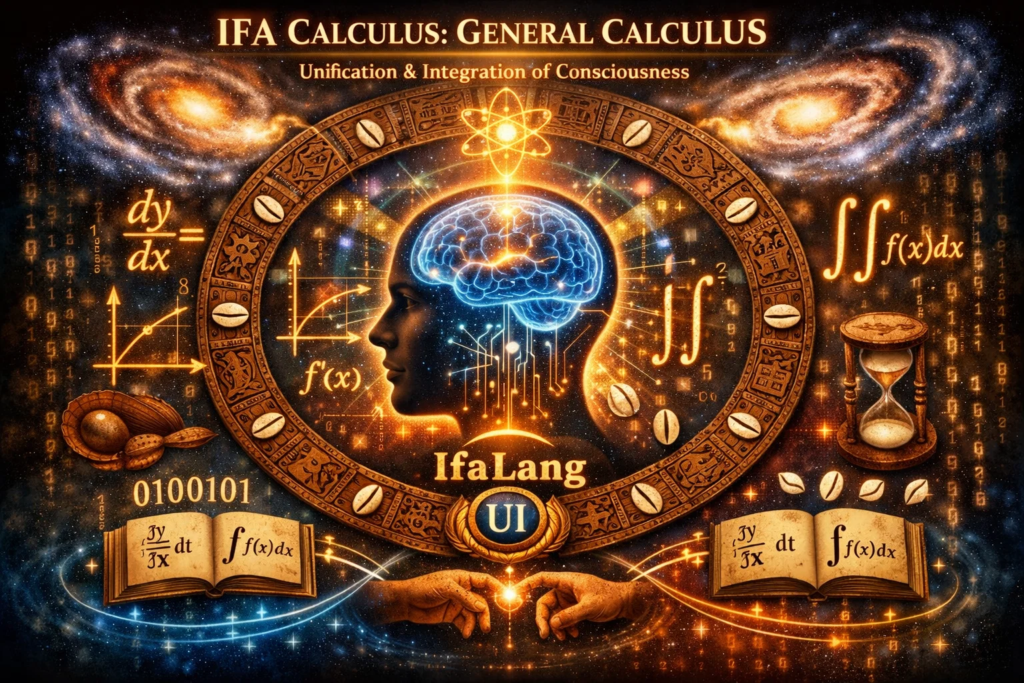
Discover the Core Concepts of Ifa Calculus
Delve into the foundational principles and versatile applications of Ifa Calculus within IFABOK, showcasing its universal role in analyzing transformation across all fields.

Enrol in the IFA Coding Academy, the School of Polymaths, to dive deeper into Ifa Calculus and its myriads of applications.