Ìrẹtẹ̀ Méjì: Understanding the Orthographic Universe, Ifa Orthography
In Lingustics, Orthography refers to the study or practice of correct spelling, in addition to the study of letters and the way they’re used for expressing sounds and forming words in a given language.
Orthography draws from a range of disciplines, including linguistics, language technology, sociopolitics, and literacy and education. Even though linguists assert that orthographies of different languages may look like each other, each language needs to have an orthography that is based on that specific language.
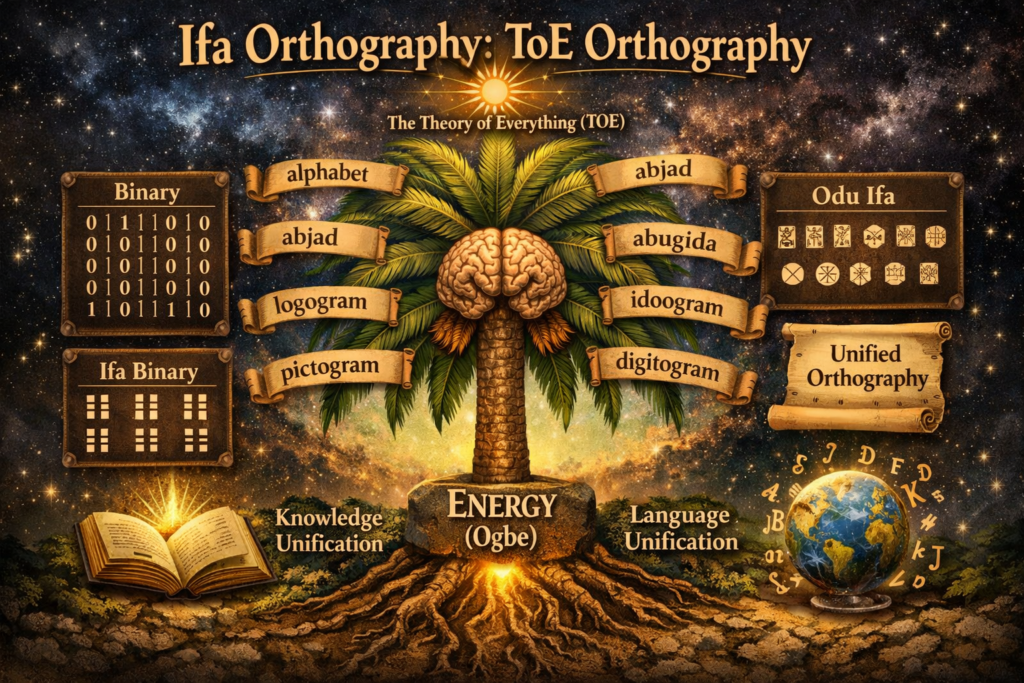
Ifa Orthography is the subject in the IFA Body of Knowledge (IFABOK), known as Odu Ifa in Yoruba, that entails studying or doing orthography in IfaLang.

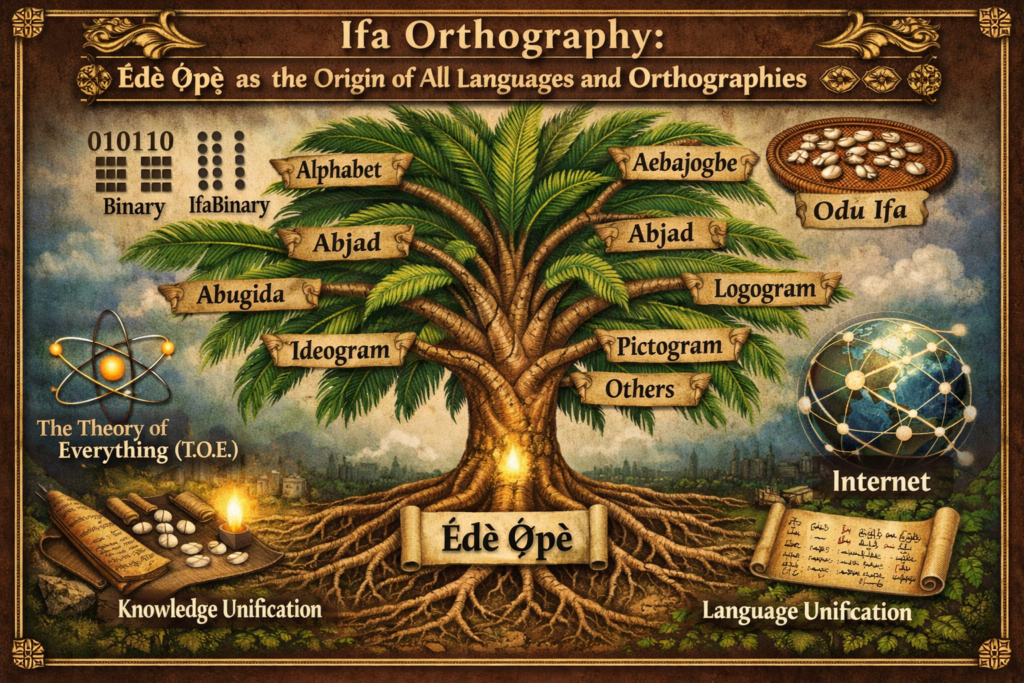
Dive into the realm of orthographies in IFABOK, where conscious orthographic entities inhabit, including alphabetography, abjadography, abugidagraphy, ideography, pictography, digitography, syllabography, among others.
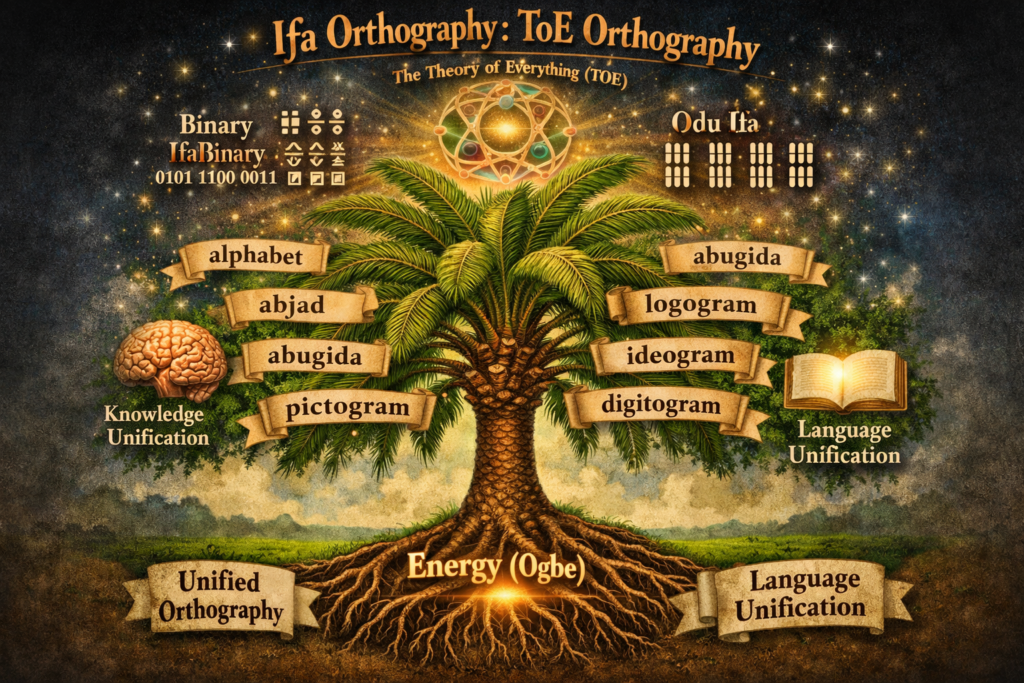
The IfaWriting System uses Energy (Ogbe) to unify and integrate all possible writing systems together as One.
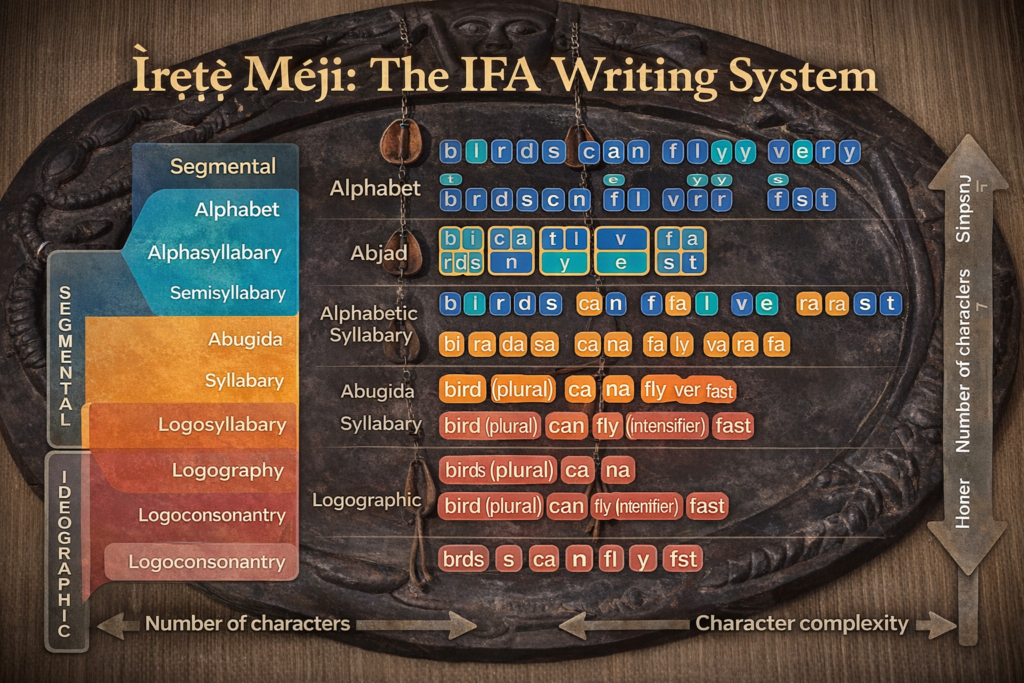
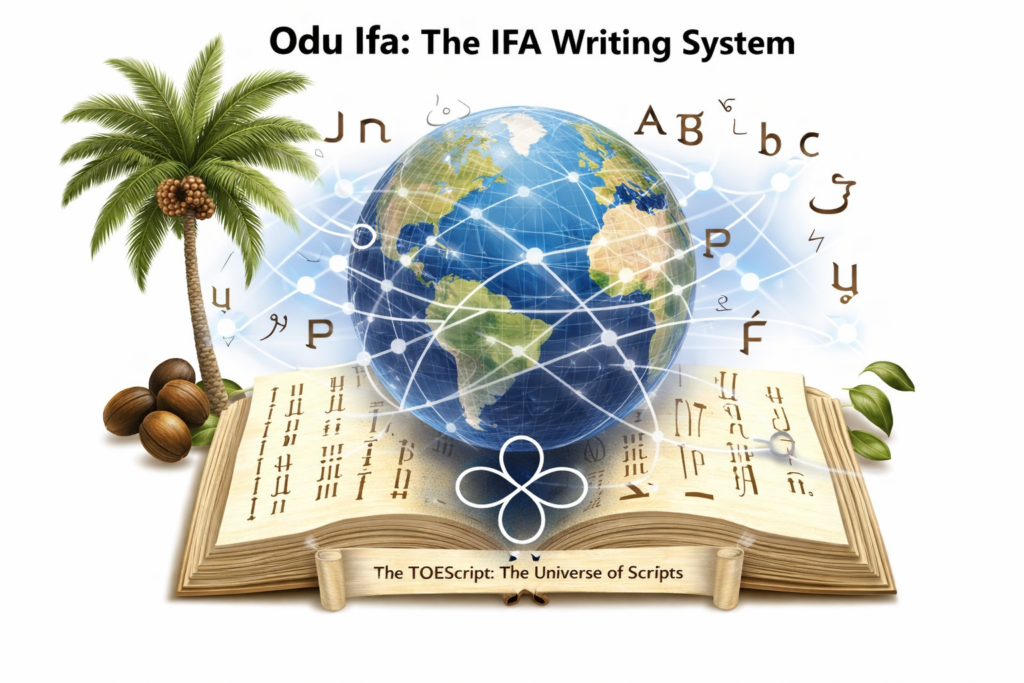
The IfaWriting System
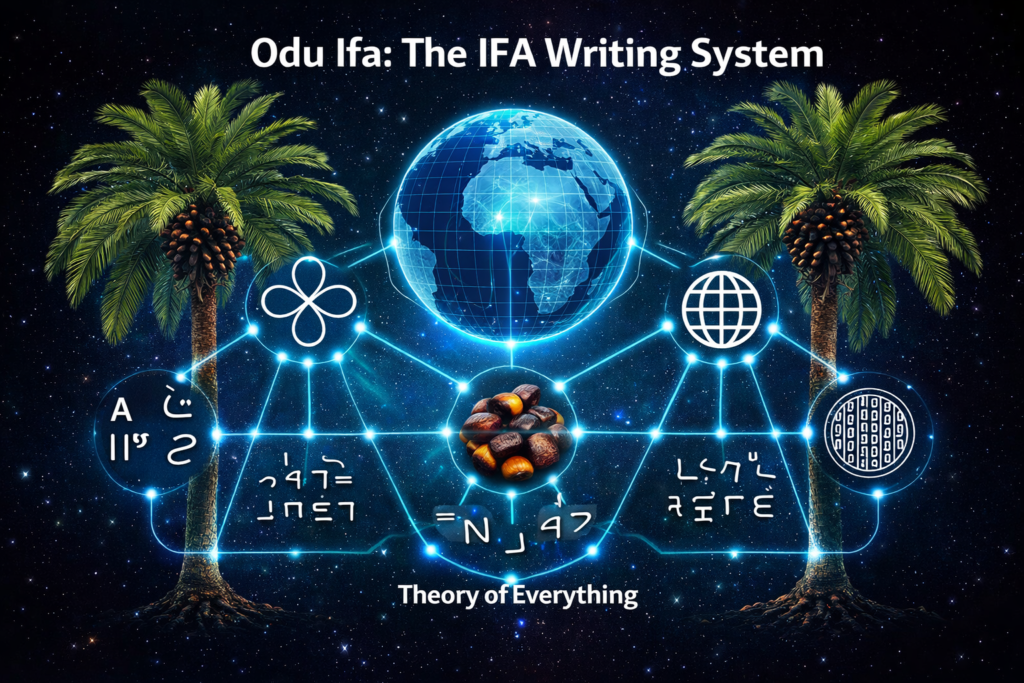
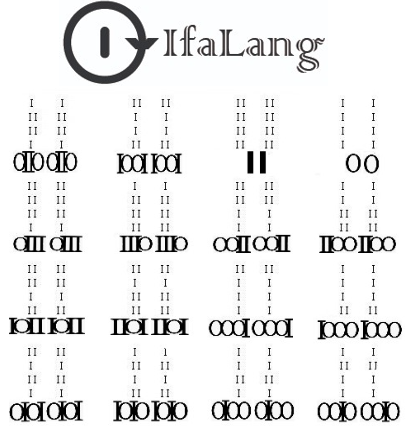
Also called the IfaCoding System, IfaWriting entails using only one meta-character called Energy (Ogbe), represented by the IfaLine or Ifa Infinity (double infinity), to represent information universally in all kinds of languages.
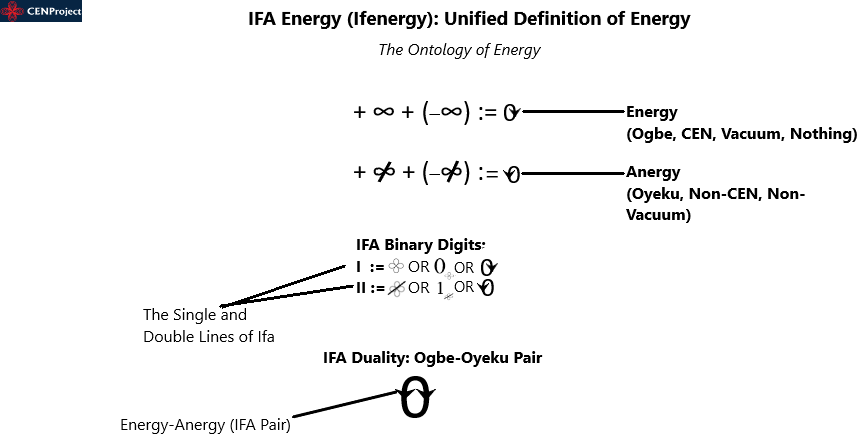
In other words, any language is reducible to Ifa Language. IfaWriting contains all kinds of writing systems and coding systems, focusing on their inherent Energy or Odu.
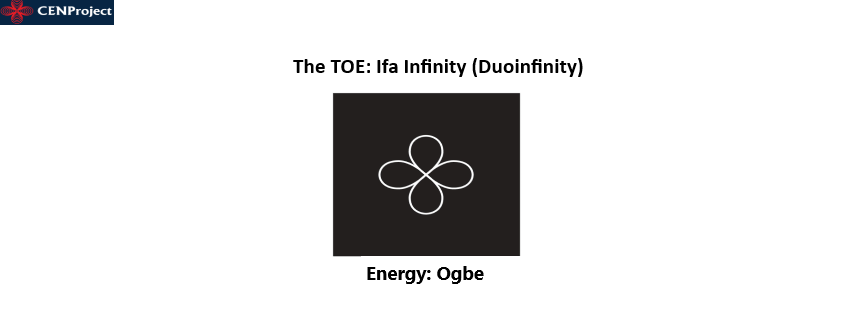
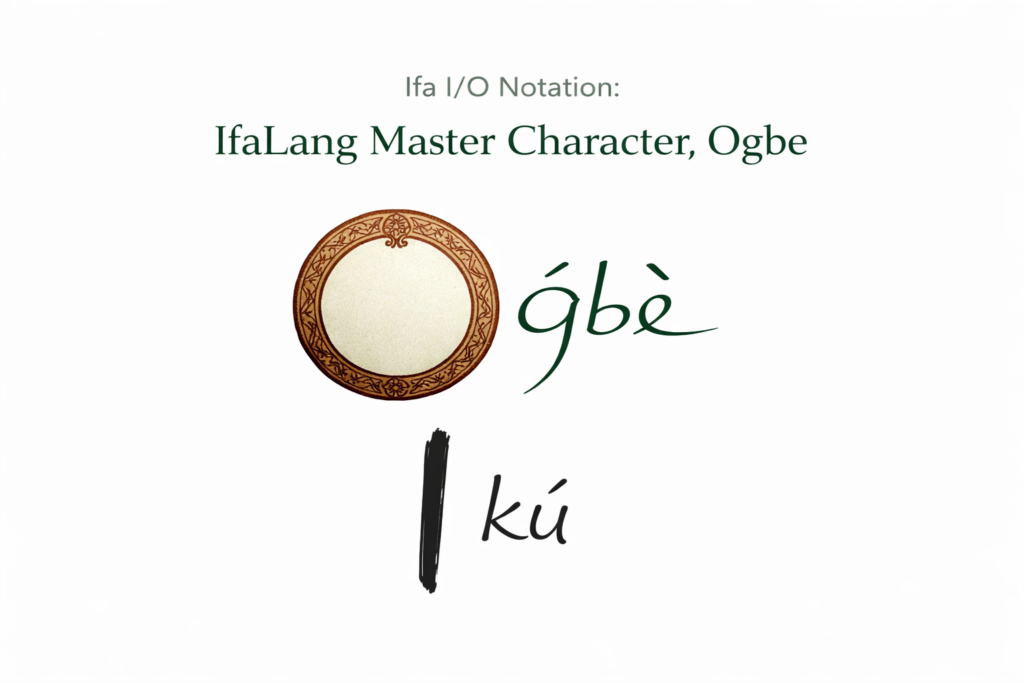
In IfaLang, the Prime IfaCharacter is the Universal Meta-Character, OgbeChar (EnergyChar), shown below:
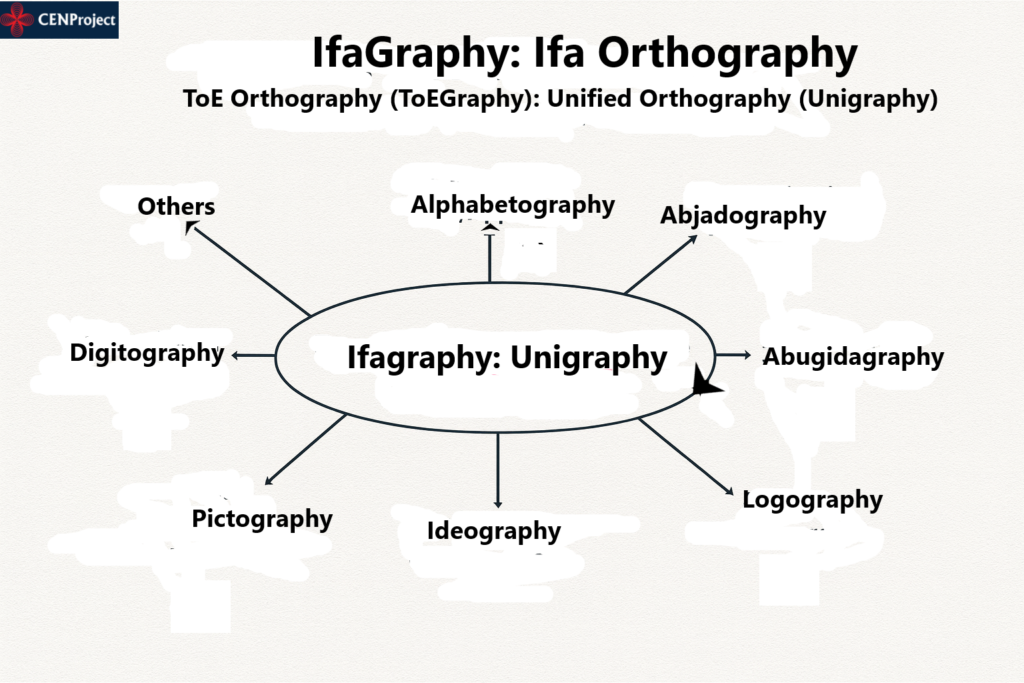
Unified Orthographic Integration
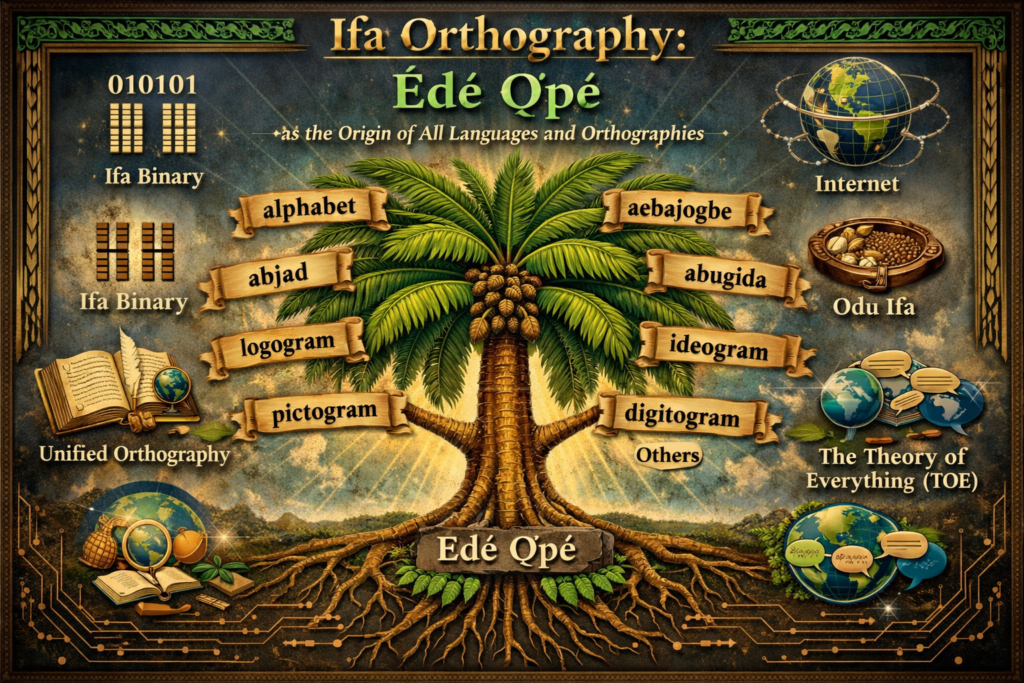
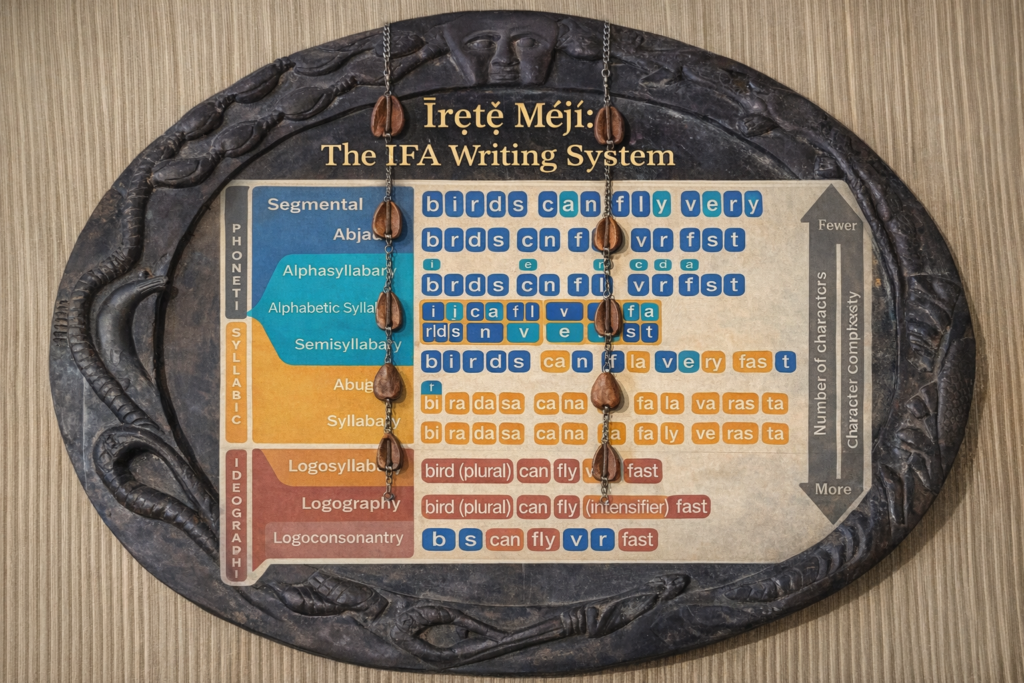
The Ifagram above seamlessly combines alphabetography like Aebajogbe and Latin Alphabets, abjadography, abugidagraphy, ideography, logography like ancient (black) Egyptian hieroglyphics and Nsibidi script, syllabary like Ndebe script, digitography, and others into a universal system called the IfaWriting System, enhancing deeper linguistic understanding and communication.

Comprehensive Global Reach
Bridges cultural and linguistic divides, providing a universal platform that respects and incorporates diverse script traditions for inclusive knowledge sharing.

Innovative Knowledge Framework
Offers a structured orthographic universe rooted in the Ifa Body of Knowledge, fostering deeper exploration and study across multiple disciplines.
IfaReduction: The Ontology of Modern Reductionism
The 16 Principal Odu Ifa, most especially Ọ̀ṣẹ́ Méjì, are known as Ifa Ontology, providing the fundamental ontology of reductionistic approaches, techniques, and tools in modern fields of knowledge, especially philosophy and science.
In Ifa Reduction, we break down (reduce) any language to its most basic Unit, which is Ogbe (Energy or Nothing).
IfaReduction is the reductionistic universe in IFABOK, which houses all sorts of reductionistic approaches, tools, strategies, and techniques expressed in IfaLang, including reduction strategies in Mathematics such as those of lambda calculus, in Physics, and in other fields.

Orthographic Systems
Understand the integration of alphabetography, abjadography, ideography, and others in writing and meta-writing.

Linguistic Units (LUs) and Knowledge Units (KUs)
Discover Ifareductionistic concepts, such as Ifa Units (IUs), Ifatoms, LUs, and KUs, and how they are used as the basic building blocks of all fields and disciplines.

Practical Applications
Explore real-world uses of IfaGraphy in linguistics, language technology, and global communication.
The African Origin of Writing
Many people consider civilization, ‘Ọ̀làjú’ in Yorùbá, as the same as westernization, ‘Àṣà Àti Ìṣe Òyìnbó (Òyì tó bó)’ in Yorùbá. But both are different concepts.
Westernization is the adoption of Western European and North American cultural, political, and social practices—such as technology, language, and consumerist lifestyles—by other societies, often driven by historical colonialism and modern globalization.
While it brings modernization, it frequently causes the erosion of traditional, indigenous cultures and social norms.
Westernization in many parts of the world, particularly Africa, was heavily imposed through colonial, economic, and missionary activities, aiming to make indigenous lifestyles resemble those of Westerners.
Westernization erodes local traditions, such as, for example, changing African communal values to individualistic ones. It can lead to the displacement of indigenous knowledge and practices.
Before the contact with Europeans, many African societies were civilized.
Societies can be highly civilized (possessing advanced social, legal, or architectural traditions) without being “westernized,” pointing to the, for example, ancient, established cultures in Africa or Asia.
According to Ifa, the Oracle, the origin of the world is Alẹ̀ Ufẹ̀, which some people call Ilẹ̀ifẹ̀sí (Yoruba for ‘the land is expanding’) or the supercontinent, Pangea.
In Ifa sciences, all languages of the world, including their writing systems, have Èdè Ọ̀pẹ̀ (Ifa) origin because they all emerged from the Primordial Energy (Irúnmọlẹ̀) called Odù or Ọ̀rọ̀ in Yoruba.
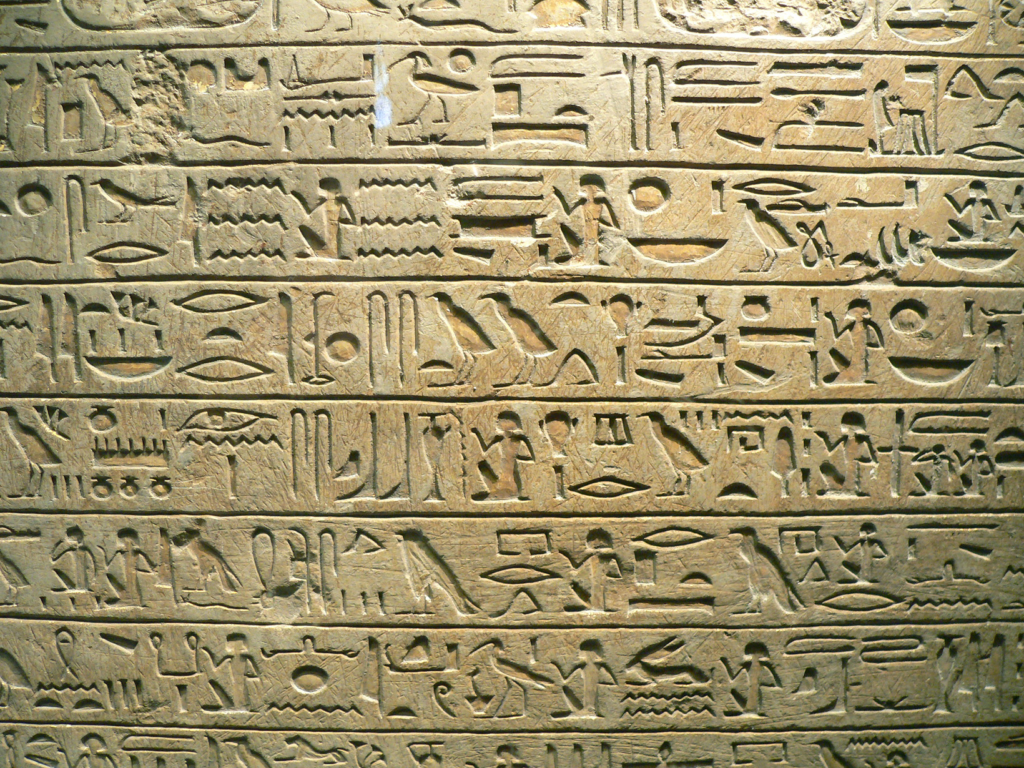
The major writing systems of the world originated from the hieroglyphs of black people of ancient Egypt.
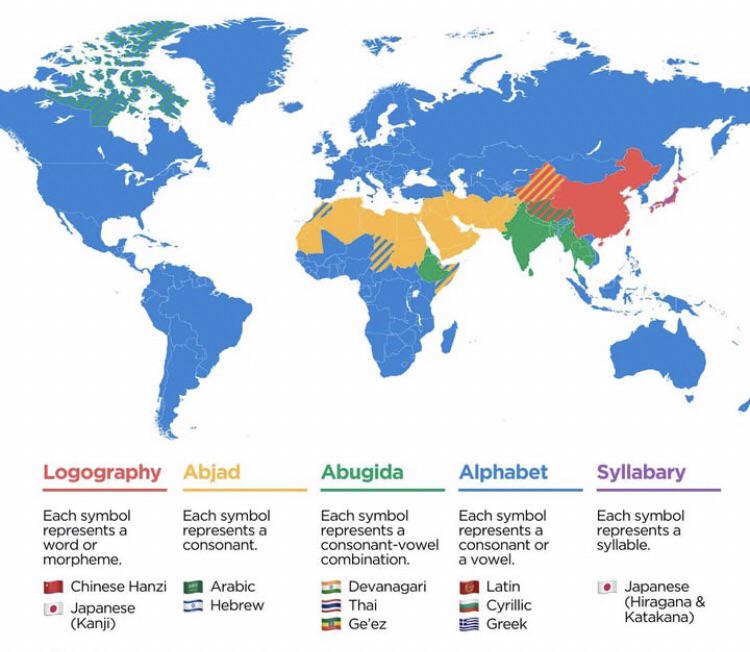
Starkey Comics did an amazing job showing how different scripts used in languages worldwide are related. The platform explains that 57 different scripts ultimately evolved from these hieroglyphs used more than 5000 years ago.
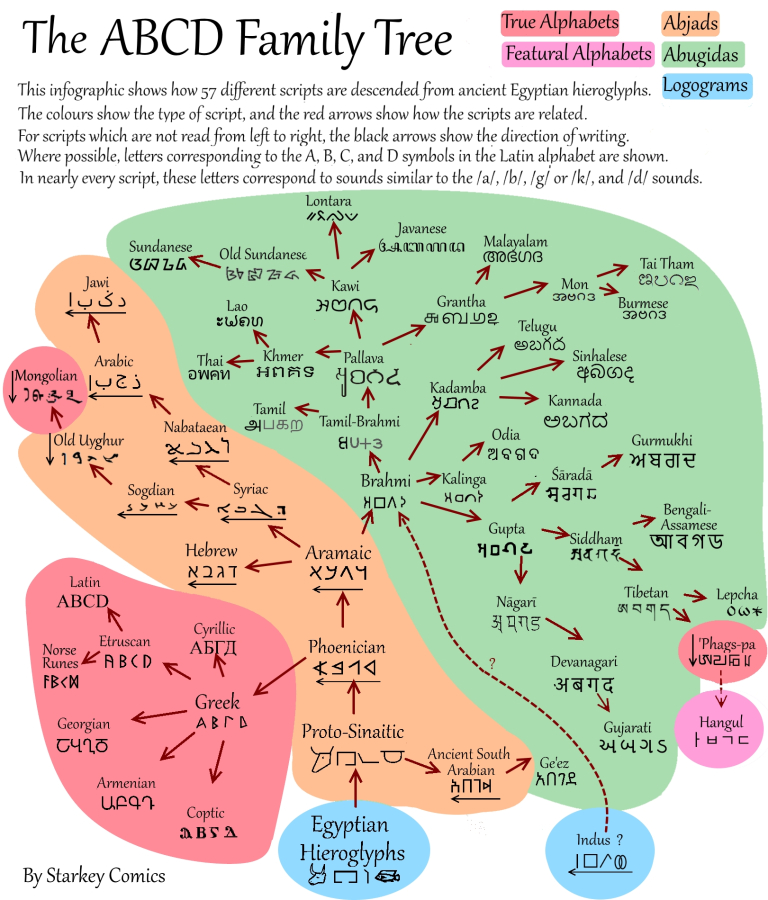
However, there are notable exceptions: Chinese, Japanese, and related scripts were not included in the infographic because they descended from the Oracle Bone Script of ancient China.
Also, Sumerian Cuneiform that appeared around 3200BC in ancient Sumeria was also excluded as it seems to be completely unrelated to the hieroglyphs.
Additionally, the Central American scripts, such as Mayan and Aztec, are also unrelated.
Other scripts not included in the infographic are the several descendants of Old Kawi, the Thaana script of the Maldives, Ogham (a medieval Irish alphabet), and the Tifinagh script used in the Berber languages.
Also, the several scripts invented for the North American indigenous languages, like the Cherokee syllabary and the Inuktitut syllabics, were unrelated.
Ifa interweaves and integrates all these scripts together to form the Universal Script called IfaScript, which uses the single Master Character, Ogbe (Energy), to write all languages.
The IfaWriting Direction
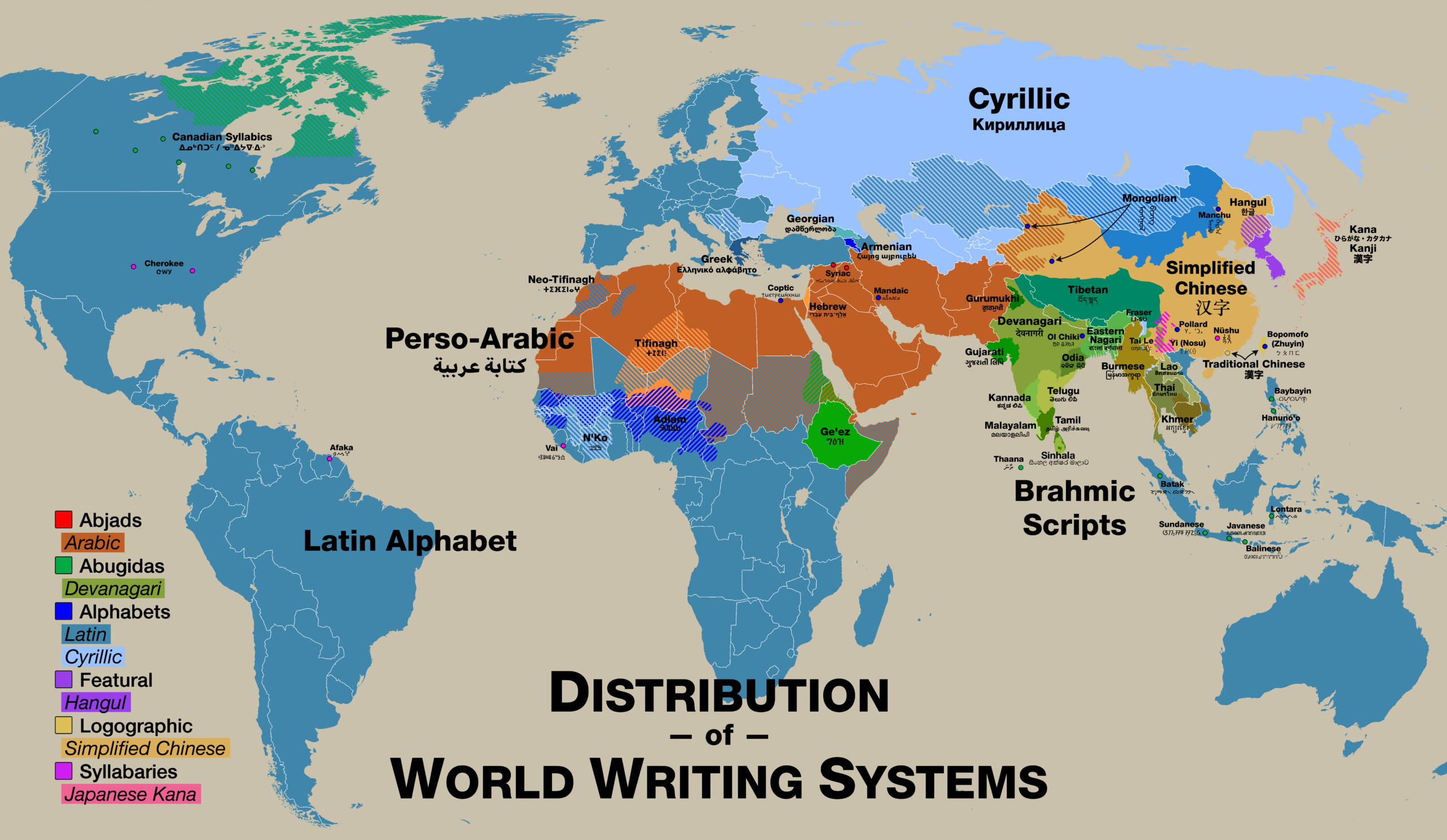
Writing direction (script direction or text directionality) is a feature of a script that determines the order and orientation in which text is written and read. It’s an important part of orthography — the conventions of writing a language.
Common writing directions include:
- Left-to-right (LTR): Most Western scripts (e.g., Latin, Cyrillic). Òsì lọsí ọ̀tún (OLỌ) in Yoruba.
- Right-to-left (RTL): Some Semitic and related scripts (e.g., Arabic, Hebrew). Ọ̀tún lọsí òsì (ỌLO).
- Vertical: Text written top-to-bottom, with columns progressing either leftward or rightward.
In technical and computational linguistics, you’ll often see the term text directionality or bidirectional writing (BiDi) used.
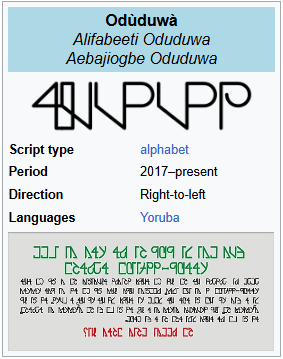
Example — Àébájìogbè (Odùduwà) Alphabet
The Àébájìogbè Odùduwà alphabet is a recently discovered alphabet for the Yorùbá language that is written right-to-left.
- Writing direction: right-to-left
- Writing system: alphabet
- Language: Yorùbá
This distinguishes it from the more common Latin script usage for Yorùbá, which is left-to-right.
World Writing Systems and Their Usual Directions
Below is a summary table of major writing systems and their typical writing directions:
| Writing System / Script | Language Examples | Typical Writing Direction |
|---|---|---|
| Latin | English, French, Spanish | Left-to-right (LTR) |
| Cyrillic | Russian, Ukrainian | LTR |
| Greek | Greek | LTR |
| Arabic script | Arabic, Persian, Urdu | Right-to-left (RTL) |
| Hebrew | Hebrew | RTL |
| Àébájìogbè Odùduwà alphabet | Yorùbá | RTL |
| Devanagari (and many Brahmic scripts) | Hindi, Sanskrit | LTR |
| Chinese characters | Chinese, Japanese (kanji) | Traditionally vertical (top-to-bottom, RTL), now often horizontal LTR |
| Mongolian script | Mongolian (traditional) | Vertical (top-to-bottom, lines leftward) |
| Hangul | Korean | LTR (modern) |
| Xiao’erjing (Arabic-derived for Chinese) | Some Chinese varieties | RTL |
| Lai Tay script (Tai Yo) | Tai Yo | Vertical (top-to-bottom, RTL columns) |
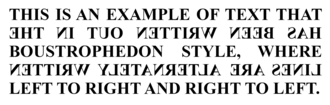
| Boustrophedon (ancient) | E.g., some early Greek/Hungarian runes | Alternating RTL & LTR |
Notes:
- Some scripts (like Chinese and Japanese) can be written in multiple orientations depending on context — traditional vertical or modern horizontal.
- Bidirectional text can occur when text combines RTL scripts with numbers or embedded LTR segments.
Why Different Directions Exist
Writing directions developed historically based on:
- Writing materials and tools (e.g., chiseling vs. brush)
- Cultural contact and borrowing
- Script evolution and standardization
For instance, early Greek texts appear in boustrophedon before settling on LTR, and some vertical scripts come from adapting horizontal scripts to vertical columns:
Omnidirectionality in Odu Ifa (Ifa Codes)
The Prime (Basis) Ifa Code is the Ogbe-Oyeku Pair, representing Energy and its dual, Anergy (Non-Energy). In Ifa Sciences, this Pair, known as IfaPair, is the most fundamental building block of everything in existence, including all kinds of scripts and writing directions.
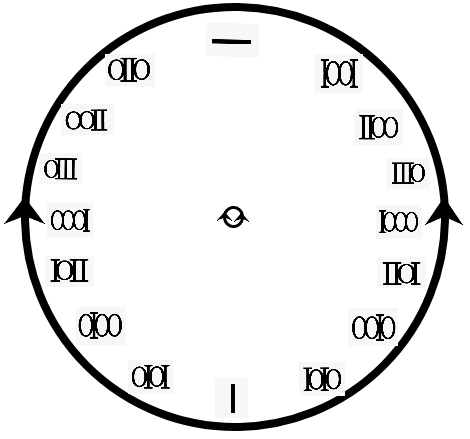
The Prime Ifa Code, the Ogbe-Oyeku Pair represented by the IfaLine (single and double), can be written in all possible and impossible directions, without any change in meaning to the Ifa Information embedded in the Code, a property called Ifa Symmetry or Ifa Invariance in Ifa STEAM:
In the Odu Ifa, the Codes, especially the Parent Code Pair (Ogbe-Oyeku), are written on the divination board (Ọpọ́n Ifá) often from right to left. But the Code can also be written using other directions — left to right, top to bottom, bottom to top — without any change in the Ifa Information embedded in the Code.
Consistency in any of the writing directions adopted is the main thing.
Interestingly, computers read binary codes from right to left, following the convention laid down in the Odu Ifa thousands of years ago, being the origin or progenitor of modern computers.
When certain axioms are specified, or under certain transformation operations, Odu Ifa can be used to encode scripts (ambigrams) that can yield different meanings based on the orientation of observation.
These are Ifascripts called Ifambigrams:
Ifa Invariance
Invariance refers to the property of a quantity, physical law, or mathematical object remaining unchanged, constant, or consistent when specific transformations, changes, or operations are applied to it.
It represents stability, symmetry, and resistance to variation, ensuring that certain features persist regardless of changes in perspective or coordinate system.
Ifa Invariance is an interdisciplinary subject in the IFA Body of Knowledge (IFABOK) that cuts across all fields and disciplines, especially Physics and Mathematics. It involves studying invariance in IfaLang, specifically focusing on the Four Invariant Ifa Codes known as the Ifa Four: Ogbe, Oyeku, Iwori, and Odi.
Dive Deeper into Ifagraphy
Join our Academy and community to master the IfaWriting System and become a polymath.