
Ifa & Orisa Energy Studies
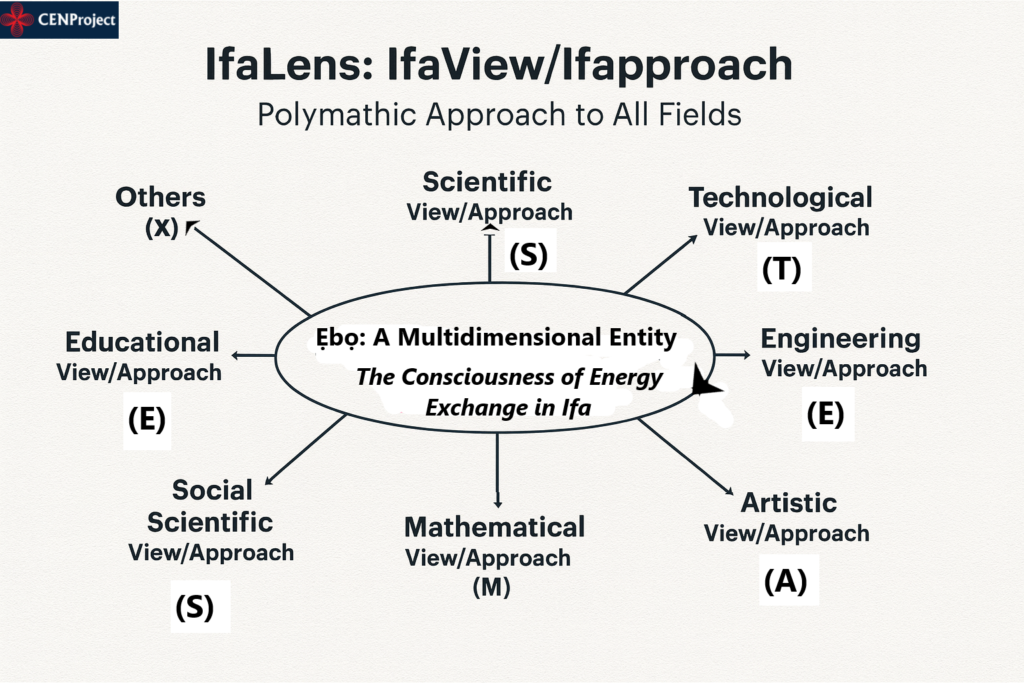
Basically, ebology is the mathematical and holistic study of Ẹbọ, a multidimensional being.
In layman terms, Ẹbọ means sacrifice, ritual, or offering. But it is much deeper than this because it is a core Aspect in the metascience of Ifa and Orisa.
In addition, Ebology is the Energy Exchange Body of Knowledge (EnxBOK) and is the science and art of energy exchange.
In the IFA Body of Knowledge (IFABOK), Ebology is the structured knowledge, science, practice, philosophy, and art of Energy exchange as a system of interaction between humans, nature, and non-physical forces. It deals with studies and research on Ifa Energy Exchange (ToE Energy Exchange) or Consciousness Energy Exchange.
Key areas of studies and research in Ebology are Ifa Economics, Ebo Economics (Eboconomics), Ebo Economy, and others.
Simply put, Ebo Economics is the Economics of Ebo. Eboconomics is the Amulu (Composition) of Ebology and Economics.
Ebology has a wide range of applications on the IFA Internet, including eboconomical systems and technologies, applying the knowledge of the Ifa Metascience, eboconomics.
Ifa Energy Management
Dive into the foundational principles and transformative power of Ebology in energy exchange systems and Ifa Energy Management Systems.


Ifa Energy Exchange Network
Understand how Energy-Based Communications (Ifa Communications and Orisa Communications), structured ritual offerings in accordance with Ifa Principles on the Ifa Energy Exchange Framework, Ebonetwork (Ebonet), facilitate balanced interactions among humans, all fields, nature, and spiritual realms, enhancing harmony and consciousness.

Understanding Ebo Economy
Learn about the economic models rooted in Energy exchange that promote sustainable practices and interconnected prosperity.

The Amulu: Composition of Ebology and Economics
Explore the foundational elements that compose Eboconomics, bridging Energy science with metaphysical economics for holistic understanding.
Understanding Ebology
Discover the foundational principles of Ebology, guiding you through the essentials of energy exchange and ritual practice.

Step One: Foundations of Energy Exchange
Begin by exploring the core concepts of Ẹbọ and the interaction between humans, nature, and spiritual energies, establishing the basis for deeper engagement.

Step Two: Applying Eboconomics
Learn to implement Ifa and Ebo Economics principles, navigating the structured systems that govern consciousness energy exchange.

Step Three: Embracing Eboconomical Systems
Understand how to utilize advanced Ebology technologies and metascience to enhance and sustain balanced energy interactions.
Explore the Depths of Ebology Knowledge
Dive into comprehensive insights on energy exchange, Ifa Economics, and the philosophy of Ebology to deepen your expertise.
Ifa Energy Exchange
Understand the core principles and rituals defining Ifa’s energetic interactions.
Eboconomics Principles
Examine the structure and function of Eboconomical systems within spiritual and natural exchanges.
Ebo Economy Overview
Discover the composition and metascience behind the Ebo Economy and its practical applications.
The Principles of Ebology
There are different ebological principles. Some of them are outlined as follows:
IfaWave Function: Consciousness Wavefunction
A wavefunction is a mathematical description of the quantum state of a particle or system, encapsulating information about its position, momentum, time, and spin.
Introduced in 1925 via the Schrödinger equation, it represents a “field of potentiality” rather than a definite location, where the squared magnitude gives the probability density of finding a particle in a specific place
Wave function collapse is a quantum mechanics phenomenon where a system in a superposition of multiple states reduces to a single definite state upon interaction or measurement.
Before this interaction, the system exists in a probability cloud; observation forces it to “choose” one state, transforming it into classical reality.
A wave function is a mathematical description of a quantum system’s state, encompassing all possible configurations as a superposition, where the square of its amplitude represents the probability of finding a particle in a specific state.
Wavefunction collapse occurs when an observation or measurement forces this superposition to abruptly reduce to a single, definite state.
In IfaLang, Ifawave function or consciousness wavefunction is the consciousness of wavefunction.
Known as Amulu in Yoruba, Ifa Superposition (superposition expressed as an energyform in IfaLang) generalizes this superposition principle to everything in existence and every field of knowledge.
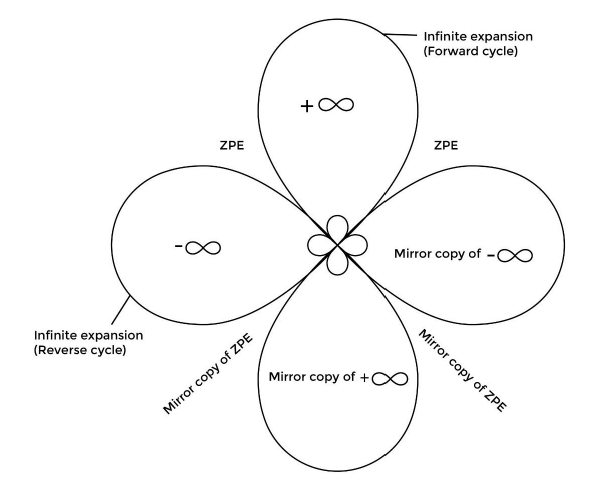
Also called Consciousness Superposition, IfaSuperposition states that anything or any system exists infinitely in a superposition or combination of all possible energyforms or energystates unless when observed/experienced and that forces its wave function to collapse to a specific energyform/energystate that is measured/seen/studied.
Consciousness Wavefunction provides the most fundamental ontology of wavefunction defining it as a mathematical energyform, a meta-function of Ogbe Energy (Ifa Infinity):
IfaWork Function: Consciousness Workfunction
Workfunction Theory in Odu Ifa: Developing the General Theory of Workfunction
To understand work function and Ifawork function, it is crucial to first explain the concepts of work in different disciplines ranging from the sciences to the non-sciences:
IfaWork (Toework): A General Theory of Work
Work in the Physical Sciences
In the physical sciences, work is fundamentally the process of energy transfer between systems through forces, fields, or interactions.
At its deepest level:
Work occurs whenever energy is transferred in an organized way that changes the state, motion, structure, or configuration of a system.
The concept appears across:
- classical mechanics,
- thermodynamics,
- electromagnetism,
- quantum physics,
- chemistry,
- relativity,
- information theory,
- biology,
- and engineering.
Although the mathematical forms differ, the underlying idea remains:
work is structured energy exchange.
1) Classical Mechanical Work
In classical mechanics, work occurs when a force causes displacement.
The standard definition is:
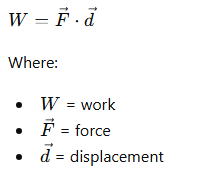
The dot product means:
- only the component of force along the displacement does work.
Physical Meaning
Examples:
- pushing a box,
- lifting a weight,
- compressing a spring.
If there is force but no displacement:
- no mechanical work is done.
If displacement is perpendicular to force:
- work is zero.
Work–Energy Theorem
Mechanical work changes kinetic energy:
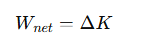
This connects force dynamics to energy transformation.
2) Thermodynamic Work
In thermodynamics, work is energy transferred through macroscopic state changes.
The most common example is pressure–volume work:
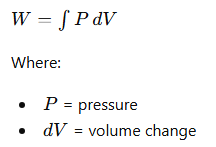
Interpretation
A gas expanding pushes its surroundings:
- energy leaves the gas as work.
A gas compressed by surroundings:
- energy enters the gas as work.
Thus thermodynamic work is:
energy transfer through coordinated bulk motion.
Other Thermodynamic Forms
- shaft work
- surface tension work
- magnetic work
- electrical work
- chemical work
Thermodynamics generalizes work into:
any organized energy transfer excluding heat.
3) Electrical Work
Electrical work occurs when electric fields move charges.
For a charge moving through potential difference:
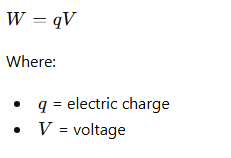
Interpretation
Electrical work powers:
- motors,
- circuits,
- computers,
- batteries,
- electronic devices.
Electric fields perform work by transferring energy to charged particles.
4) Magnetic Work
Magnetic forces can redirect motion and store energy.
Examples:
- inductors,
- magnetic materials,
- electromagnetic motors.
Magnetic systems exchange work through changing magnetic fields and currents.
5) Elastic Work
Springs store energy through deformation.
Hooke’s law:
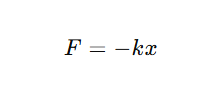
Elastic work becomes stored potential energy.
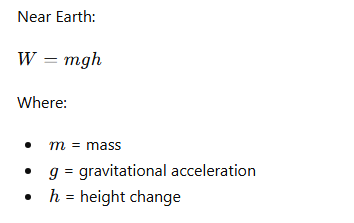
6) Gravitational Work
Gravity performs work when masses move through gravitational fields.
7) Chemical Work
Chemical reactions involve rearrangements of atomic bonds.
Chemical work appears in:
- metabolism,
- batteries,
- combustion,
- electrochemistry.
Chemical potential drives energy exchange.
8) Relativistic Work
In Theory of Relativity, work changes relativistic energy and momentum.
At high velocities:
- mass-energy relations become important,
- classical formulas break down.
Energy and work become frame-dependent quantities linked to spacetime geometry.
9) Quantum Work
Quantum mechanics changes the meaning of work fundamentally.
In classical physics:
- systems have definite trajectories.
In quantum mechanics:
- systems evolve probabilistically through wavefunctions.
Quantum Work as Energy Transition
Quantum mechanical work is generally interpreted as:
energy transferred during transitions between quantum states.
Unlike classical work:
- work is not always represented by a single observable operator.
Instead, it often emerges from:
- measurement processes,
- Hamiltonian changes,
- quantum state evolution.
Time-Dependent Hamiltonian View
If the Hamiltonian changes with time:
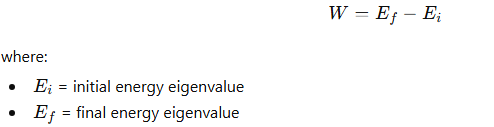
Quantum work becomes:
the energy difference associated with state transitions.
Features of Quantum Work
Quantum work may involve:
- uncertainty,
- superposition,
- tunneling,
- entanglement,
- fluctuations.
This leads to:
- quantum thermodynamics,
- fluctuation theorems,
- nanoscale energy theory.
10) Statistical Mechanical Work
In statistical mechanics:
- work is linked to probability distributions over microscopic states.
The Jarzynski Equality connects nonequilibrium work and free energy:
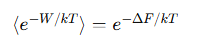
This bridges microscopic fluctuations and macroscopic thermodynamics.
11) Informational Work
Modern physics increasingly links work and information.
Landauer’s principle states:
erasing information requires minimum energy expenditure.
Thus:
- computation has thermodynamic cost,
- information processing can perform physical work.
This connects:
- physics,
- computation,
- entropy,
- and intelligence.
12) Biological Work
Living systems perform work continuously:
- muscle contraction,
- cellular transport,
- neural signaling,
- metabolism.
Biological work converts:
- chemical energy → mechanical/electrical work.
ATP functions as a molecular energy currency.
13) Cosmological Work
In cosmology:
- expanding spacetime performs thermodynamic work.
The universe itself evolves through large-scale energy redistribution.
Dark energy, gravitation, and cosmic expansion involve generalized work concepts.
Across all sciences:
| Context | Meaning of Work |
|---|---|
| Mechanics | Force causing displacement |
| Thermodynamics | Organized energy transfer |
| Electromagnetism | Field-driven energy transfer |
| Chemistry | Bond-energy transformation |
| Quantum Physics | State-transition energy exchange |
| Information Theory | Energetic cost of computation |
| Biology | Functional energy conversion |
| Cosmology | Large-scale energy redistribution |
Work in Non-Science and Everyday Contexts
Outside the physical sciences, the word work expands far beyond “force × distance.” In ordinary life, it refers to purposeful effort directed toward producing change, value, function, or meaning.
The common thread across most human uses is:
Work is organized effort applied toward a goal, outcome, or transformation.
Different fields emphasize different aspects:
- effort,
- productivity,
- responsibility,
- value creation,
- function,
- survival,
- meaning,
- or social contribution.
1) Everyday Meaning of Work
In ordinary language, work means:
- doing tasks,
- exerting effort,
- carrying responsibilities,
- or accomplishing something useful.
Examples:
- cleaning a room,
- studying,
- cooking,
- fixing a car,
- caring for children,
- earning a living.
In this sense:
work is intentional activity requiring time, energy, or skill.
2) Employment and Labour
In economics and society, work often means:
- paid employment,
- labour,
- professional activity,
- occupation.
Examples:
- teaching,
- engineering,
- farming,
- programming,
- medicine.
Here, work is tied to:
- income,
- production,
- markets,
- and economic systems.
3) Work as Value Creation (Economics)
In economics, work is often understood as:
human effort used to produce goods, services, or economic value.
Classical economists such as Adam Smith and Karl Marx treated labour as central to production and wealth.
Different economic perspectives interpret work differently:
- capitalism → productivity and market value,
- Marxism → labour and class relations,
- modern economics → human capital and specialization.
4) Psychological Meaning of Work
In psychology, work is linked to:
- motivation,
- identity,
- achievement,
- fulfillment,
- stress,
- meaning.
People often experience work as:
- purpose,
- burden,
- ambition,
- duty,
- creativity,
- or self-expression.
The psychology of work studies:
- burnout,
- motivation,
- productivity,
- workplace behavior,
- job satisfaction.
5) Sociological Meaning of Work
In sociology, work is viewed as:
a social institution organizing human roles, responsibilities, and relationships.
Work structures:
- status,
- class,
- identity,
- power,
- culture,
- and social organization.
Examples:
- division of labour,
- gendered work roles,
- industrialization,
- digital labour.
6) Philosophical Meaning of Work
Philosophy asks:
- Why do humans work?
- Is work necessary?
- Does work give meaning?
Different traditions answer differently.
Ancient View
In many ancient societies:
- manual labour was considered lower status,
- contemplation and philosophy were valued more highly.
Religious Views
Many religions frame work as:
- duty,
- service,
- discipline,
- stewardship,
- worship.
Examples:
- Christian “calling”
- Islamic emphasis on honest labour
- Buddhist mindful action
Existential View
Modern existential thinkers see work as connected to:
- freedom,
- meaning,
- alienation,
- authenticity.
7) Work as Function (“It works”)
In everyday speech:
“work” also means “to function properly.”
Examples:
- “The phone works.”
- “This method works.”
- “The engine is working.”
Here, work means:
successful operation or effectiveness.
This meaning is closely related to the idea of producing intended outcomes.
8) Creative Work
Artists, writers, and creators use “work” differently.
Examples:
- a painting is a “work of art,”
- a novel is a literary work,
- a symphony is a musical work.
Here, “work” means:
a completed creation or expression.
9) Emotional and Relational Work
Modern social theory recognizes invisible forms of work:
- emotional labour,
- caregiving,
- relationship maintenance,
- parenting.
Examples:
- calming conflicts,
- supporting others emotionally,
- maintaining social harmony.
This work may not be financially compensated but is socially essential.
10) Spiritual and Inner Work
In spiritual traditions, work can refer to:
- self-transformation,
- discipline,
- meditation,
- moral refinement,
- consciousness development.
Examples:
- “inner work”
- “shadow work”
- contemplative practice
Here, work means:
intentional transformation of the self.
11) Political and Activist Work
Activists often speak of:
- organizing work,
- movement work,
- community work.
This refers to coordinated effort toward social change.
12) Digital and Computational Work
In computing:
- processors perform computational work,
- algorithms process information,
- systems execute tasks.
Even outside physics, “work” implies:
organized transformation of inputs into outputs.
13) Educational Work
Students “work” when they:
- solve problems,
- practice skills,
- study,
- research,
- learn.
Educational work transforms:
- ignorance → understanding,
- potential → capability.
14) Biological and Evolutionary Context
In biology and evolution:
- organisms “work” to survive,
- cells perform biochemical work,
- ecosystems maintain functional balance.
This overlaps with physical definitions but extends into adaptive and functional behavior.
Across the non-sciences, work involves:
| Element | Description |
|---|---|
| Effort | Expenditure of energy/resources |
| Direction | Goal or intention |
| Transformation | Change in state or condition |
| Process | Activity unfolding over time |
| Outcome | Produced effect, value, or function |
IfaMechanical Work: The ToE of Work
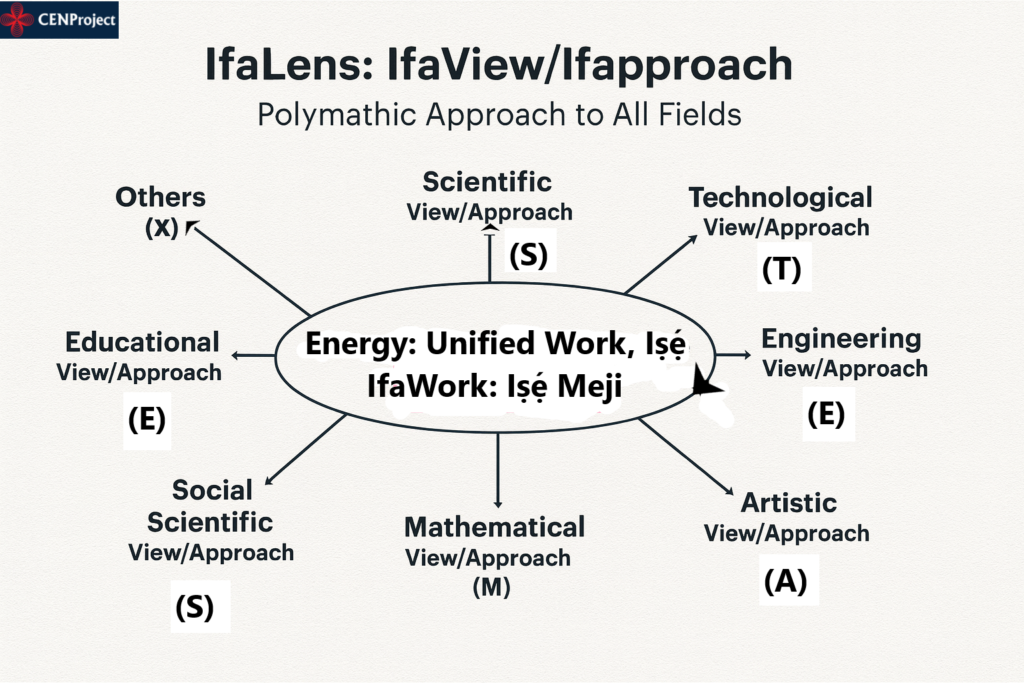
In the Energy-based approach of Ifa, Work in all its manifestations in all fields is an energyform known as Iṣẹ́ in Yoruba, the orisa (consciousness) encoded using the metamathematics of Odu Ifa Ọ̀ṣẹ́ Méjì below:
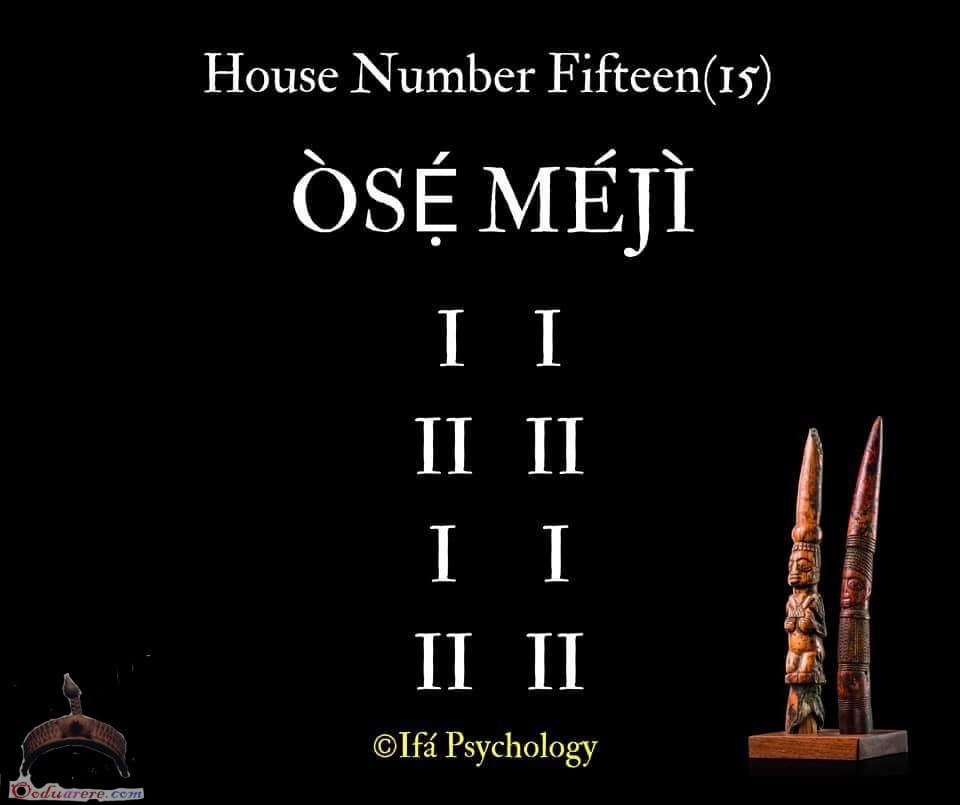
Odu Ifa reveals the non-physical dimensions, called Ọ̀run in Yoruba, as the origin of Work of all sorts and conceptions in modern fields.
Different Odu Ifa talk about the fundamental ontology of Work as a conscious entity:
Ifa Mechanical Workfunction: The ToE of Workfucntion
In physics, the work function is the minimum energy required to remove an electron from the surface of a material into free space (vacuum).
It is usually denoted by ϕ (phi).
In the paper ‘100 Years of Work Function‘, Halas (2006) explains that “the term “work function” (WF) was coined about 1923 for the work expressed in eV which is necessary to get electron out of metal.
“Prior to that time it was defined as the work necessary to get electron out of metal, or work done when electron escapes from a metal. Over the last 100 years this fundamental property of a surface has been examined nearly for all elements and for many conducting compounds or alloys.”
Let’s look at how the term has evolved in modern physics, surface science, and materials science:
1) Thermodynamic / energy-barrier view (classical concept)
This is the original idea:
The work function is the minimum energy needed to move an electron from inside a solid to just outside it in vacuum.
A more precise modern definition is:
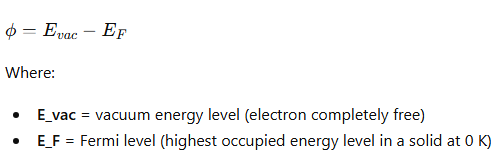
This makes the work function a boundary energy gap between bound and free electron states.
2) Surface physics / interface concept
In surface science, the work function is no longer just a property of the bulk material—it becomes a surface-dependent quantity.
It depends on:
- Crystal orientation (e.g. different faces of a metal)
- Surface contamination (oxygen, adsorbates)
- Surface reconstruction
- Electric dipoles at the surface
👉 So we say:
Work function is a surface property, not purely a material property
This is crucial in nanotechnology and catalysis.
3) Thermionic emission view
In vacuum electronics (old CRTs, electron guns):
The work function becomes the energy barrier electrons must overcome to escape a heated surface.
Electron emission rate follows:
- Higher temperature → more electrons overcome ϕ
- Lower work function → easier emission
👉 Here it is interpreted as an activation energy for electron evaporation.
This is central in devices like:
- Vacuum tubes
- Electron microscopes
- Thermionic converters
4) Photoemission / quantum optics view
In the Photoelectric Effect, work function is:
The threshold energy required for photon-induced electron emission.
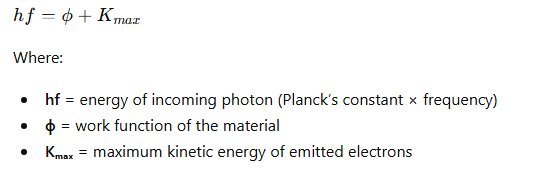
So it becomes a quantum cutoff parameter:
- Below threshold frequency → no emission
- Above threshold → electrons are released
This interpretation helped establish quantum theory itself.
5) Semiconductor / band engineering view
In semiconductors, the work function is not just about electron escape—it becomes a device alignment parameter.
It determines:
- Band bending
- Schottky barrier height (the Schottky effect or field-enhanced thermionic emission)
- Contact behavior (ohmic vs rectifying)
In this view:
Work function = alignment between a material’s Fermi level and vacuum level that controls electron flow at interfaces
This is essential in:
- Solar cells
- Transistors (MOSFETs)
- Sensors
6) Electrostatic / dipole-layer view (modern surface science)
At a deeper level, work function is influenced by:
- Surface dipole layers
- Charge redistribution
- Electron spill-out beyond the surface
So modern theory treats it as:
A consequence of electrostatic potential step at the material boundary
This explains why adsorbed molecules can drastically change ϕ.
7) Materials engineering view (“work function engineering”)
In modern nanotech and electronics:
We deliberately tune the work function using:
- Doping
- Alloying
- Surface coatings
- 2D materials (like graphene)
Goal:
- Optimize electron injection/extraction
- Improve efficiency of devices
Work Function in Terms of Energy Exchange
At a much deeper and fundamental level, work function can also be expressed in Ebo Language (EboLang), a key OrisaLang (the Dual of Ifalang), i.e., energy exchange (energy transfer) view or EboView:
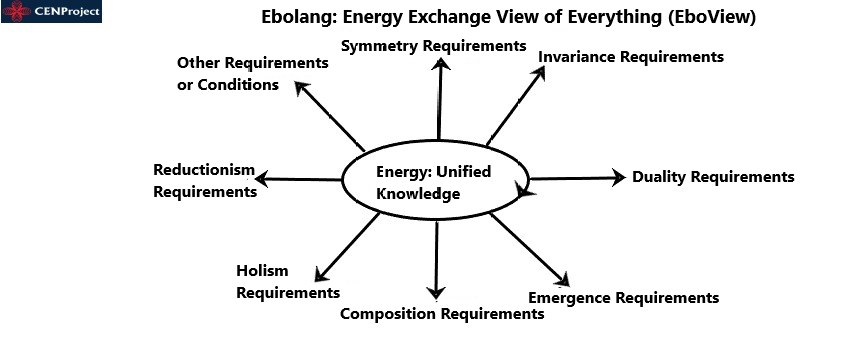
The work function can be understood fundamentally as an energy-exchange threshold between a material and its environment. More generally, it is the minimum transferable energy required for an electron to transition from a bound state inside matter to a free state outside matter.
Solid State Theory
In Solid State Physics, in a solid, electrons exist in bound quantum states due to electromagnetic interactions with atomic nuclei and neighboring electrons. To escape the material, an electron must acquire enough energy to overcome this binding environment.
The work function therefore represents:
the minimum energy exchange required for a successful electron transition across the material–vacuum boundary.
Mathematically:
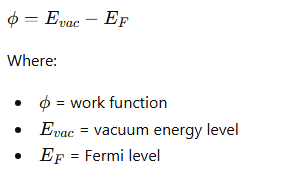
This equation expresses the energetic difference between:
- the electron’s equilibrium state inside the material, and
- the free-electron state outside the material.
Modes of Energy Exchange
The work function appears whenever energy is transferred into electronic systems. Different physical processes supply this energy differently.
1) Photon–Electron Energy Exchange
In the Photoelectric Effect, light transfers discrete packets of energy (photons) to electrons.
Einstein’s relation:
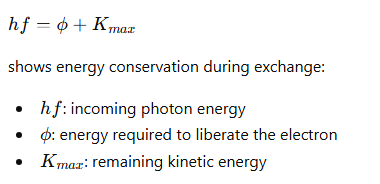
Interpretation:
- Part of the exchanged energy breaks electron confinement.
- Remaining energy becomes electron motion.
This was one of the foundational results of quantum physics.
2) Thermal Energy Exchange
In thermionic emission, heat supplies the exchange energy.
As temperature rises:
- lattice vibrations increase,
- electrons gain kinetic energy,
- some electrons exceed the work-function barrier.
The emission current approximately follows the Richardson–Dushman equation:
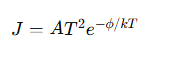
This equation shows that electron emission depends exponentially on the energy barrier .
Here, the work function behaves like an activation energy for electron escape.
3) Electric-Field Energy Exchange
Under strong electric fields, electrons can tunnel through the work-function barrier even without classically sufficient energy.
This occurs in:
- field emission,
- scanning tunneling microscopy,
- nanoscale electronics.
The electric field modifies the energy landscape and reduces the effective barrier.
In this conception:
work function becomes a dynamic interface quantity affected by external fields.
4) Chemical Energy Exchange
Adsorbed atoms or molecules on a surface can change electron distributions and surface dipoles.
This alters the work function because:
- charge rearrangement changes boundary electrostatics,
- electron binding strength changes,
- the energy needed for exchange changes.
Thus, work function is also connected to:
- catalysis,
- electrochemistry,
- battery interfaces,
- semiconductor engineering.
Energy Conservation Principle
From a broader physical perspective, the work function embodies a conservation principle:
No electron can leave a material unless sufficient energy is exchanged to compensate for its binding energy.
Thus the work function acts as:
- an energy threshold,
- a transition condition,
- and a boundary regulator between bound and free states.
Condensed matter theory and quantum Interpretation
In quantum mechanics, electrons are not classical particles orbiting atoms. They occupy quantum states described by wavefunctions.
The work function therefore represents:
the minimum quantum-state transition energy required to move from a condensed-matter state to a free-particle state.
This links the work function directly to:
- quantum statistics,
- Fermi surfaces,
- surface potentials,
- and electronic band structure.
Surface science: interfacial energy geometry
Modern surface physics treats work function as an emergent property of:
- electronic structure,
- electrostatic potential,
- surface geometry,
- and boundary conditions.
In nanoscience, the work function is often spatially variable across a surface, effectively becoming:
an energy landscape governing electron exchange dynamics.
This idea is central in:
- photovoltaics,
- nanoelectronics,
- quantum materials,
- plasmonics,
- and electron microscopy.
IfaWorkfunction: The Deep and General Theory of Workfunction in IfaLang
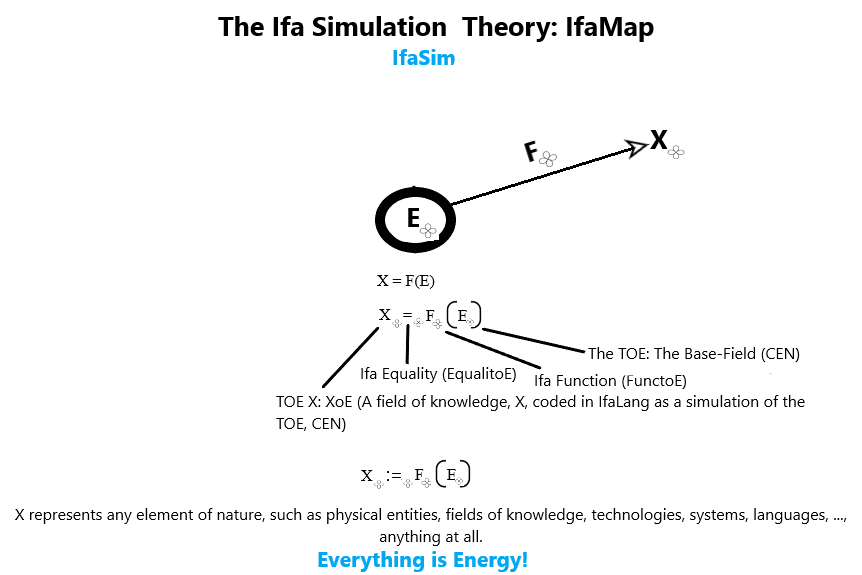
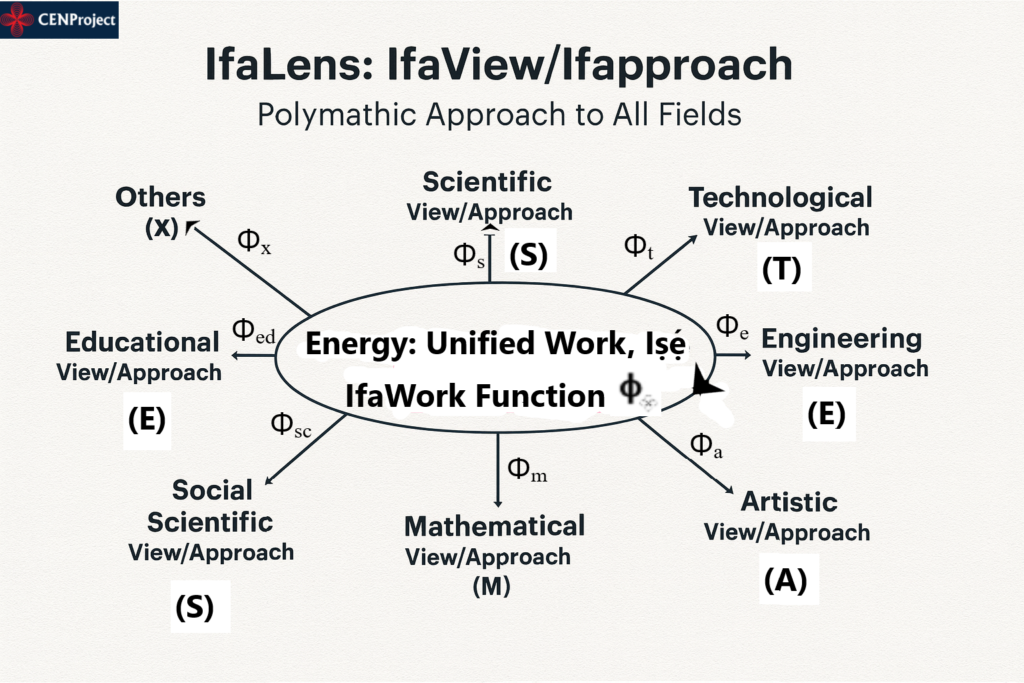
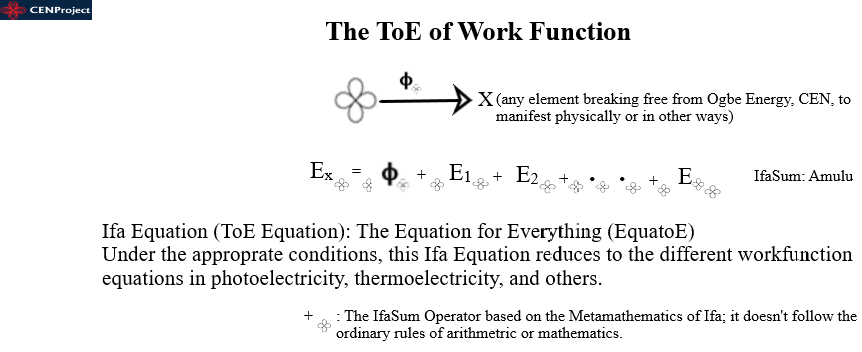
For anything to manifest physically or in other ways, it must satisfy certain (threshold) Energy requirements (i.e., Ifa Requirements). This is known as IfaWorkfunction, which is the fundamental building block and container of all kinds of workfunction.
Ifa Workfunction is a vital ebological principle, which is called the law of energy exchange in the Odu Ifa, which generalizes workfunction theory in physical science and engineering to all fields of knowledge (all dimensions of reality).
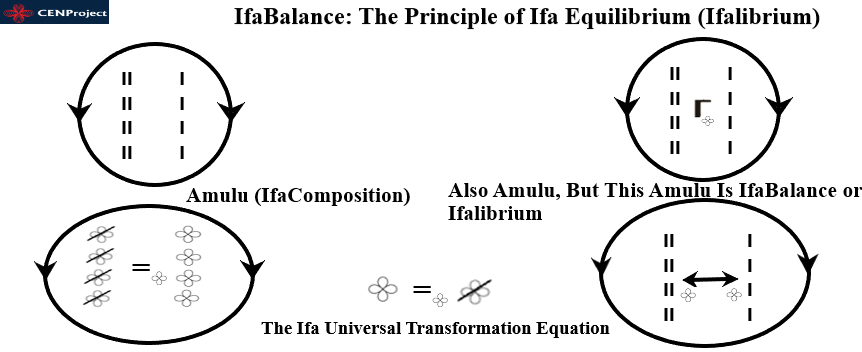
This energy exchange law in IFABOK is a manifestation of IfaBalance or Ifa Equilibrium Principle or Amulu (Ifa Composition), a much deeper Law (examined below).
Ebo, which originated from the nonphysical dimensions, is the consciousness of work function and reveals the origin of workfunction as the unphysical Universe (the innermost Universe).
This inner universe is encoded as the Ifa Entanglement, Ogbe Energy shown below:

This Unity, also referred to as Ifa Binding, is how all things in existence existed as One in the innermost universe (the Source) before the First Force (Ogbe Force or Unified Force) caused Ipin (Ifa Partition).
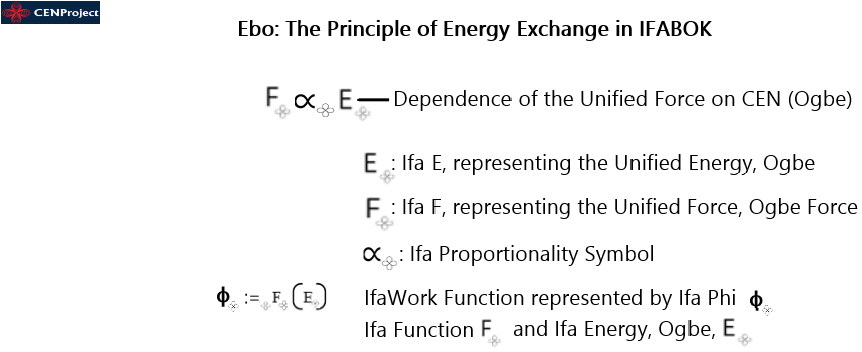
For any element of nature (anything at all) to break free from the Collective Entanglement, also known as the Totality of Existence (TOE), it must satisfy the required energy conditions or overcome the Energy Barrier that binds it to CEN.
This Energy Barrier is the pure Energy of Esu encoded by Odu Oyeku below:

IfaBalance: Ifa Equilibrium (Ifalibrium)
This is another key principle of Ebology.
Ifa Balance, the Balance of Everything (BalancoE), is a core Phenomenon or Principle that occurs and reoccurs periodically throughout the vast Odu Ifa System. The term Ifalibrium was coined by Oluwo Sarumi Ogunoroikin Fasakin, a custodian of Odu Ifa known as Babalawo in Yoruba, to describe this meta-phenomenon of Ifa Equilibrium that is central to the System.
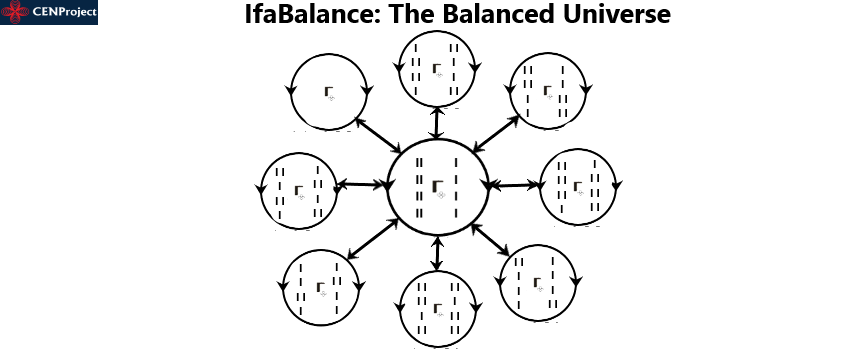
The Ifa Equilibrium Principle is also known as Ifa Equilibrium, ToE Equilibrium, Consciousness Equilibrium, Energy Equilibrium, the Equilibrium of Everything (EquilibroE), ToE Balance, Energy Balance, and Consciousness Balance.
Its dual is OrisaBalance or Orisa Equilibrium (Orisalibrium). Orisa-Equilibriums are as many as the tons of orisa in existence.
Ifa-Balance is a meta-machine (Ifamachine) for generating or constructing equations, balances, equilibria, etc.
The Theory of Equations in Odu Ifa: The African Origin of Equation Theory, Algebra
Ifalibrium is the container and fundamental building blocks of all theories, models, principles, laws, and concepts of equilibrium, balance, and stability in all modern fields, especially the sciences.
IfaBalance and OrisaBalance are the ancestors of the concepts of balance, equilibrium, stability, and related ones in all modern fields.
Balancing of Equations in Modern STEM
In Mathematics, especially the theory of equations or algebra, balancing of equations is a core concept.
Balancing of equations is the idea of maintaining equality (or equilibrium) between two sides of an equation. In the Theory of Equations within Algebra, this means applying transformations that preserve truth while revealing structure and solutions.
But “balancing” goes deeper—it is a unifying principle across science: nothing changes without something else compensating.
1. Balancing in Equation Theory (Mathematics)
An equation is like a perfect scale:LHS=RHS
Core principle:
Whatever you do to one side, you must do to the other.
Examples:
- Add/subtract same quantity:
- Multiply/divide both sides:
Deeper meaning:
Balancing preserves invariants—quantities that do not change under transformation.
This connects to the concept of Mathematical Invariance, which is central to modern mathematics and physics.
2. Balancing as Equilibrium
Balancing is essentially finding equilibrium states.
- In equations → solution (root)
- In systems → steady state
- In nature → stability
This ties directly to:
- Equilibrium (thermodynamics)
- Mechanical Equilibrium
3. Balancing in Chemistry
In Chemistry, balancing ensures conservation of matter.
Example:
Unbalanced:
Balanced:
Principle:
- Atoms are neither created nor destroyed
- Based on Law of Conservation of Mass
Application:
- Reaction prediction
- Industrial chemistry
- Pharmaceuticals
4. Balancing in Physics
Balancing expresses conservation laws:
(a) Force Balance
→ object is at rest or constant velocity
(b) Energy Balance
Energy in = Energy out
Related to:
- Conservation of Energy
(c) Charge Balance
In electrical systems:
5. Balancing in Economics
In Economics, balancing appears as:
- Supply = Demand
- Income = Expenditure
- Budget constraints
This is modeled mathematically as equilibrium equations.
6. Balancing in Biology
Biological systems maintain homeostasis:
- Temperature regulation
- pH balance
- Glucose levels
This is dynamic balancing—continuous adjustment.
7. Balancing in Engineering
Engineers use balance equations for:
- Mass balance
- Energy balance
- Control systems
Example:
Balancing of Universal Meta-Equations in IFABOK
IfaBalancing entails ensuring there is equilibrium (balance) or stability between two or more Odu Ifa to achieve the Unification and Integration of Everything (UIoE), otherwise known as IfaUI or ToEUI, among other core purposes.
The Dual Process is OrisaBalancing.
Balancing the meta-equations of Odu Ifa or Odu Orisa entails maintaining equality (or equilibrium) between (at least) two Oju Odu Ifa or Odu Orisa (Major Ifa/Orisa Code), as shown in the Ifa Table below, where Ejiogbe balances Oyeku Meji, Iwori Meji balances Odi Meji, and so on, till we get to Ose Meji that balances Ofun Meji.
These Ifa Equations and Orisa Equations are the Equations of Everything (EquatoE) and are the ancient scientific Principle of Ifa that gave birth to equation theory and the modern practice of balancing equations in STEM, especially Mathematics. Their Duals are Orisa Equations (Equations of Odu Oosa).
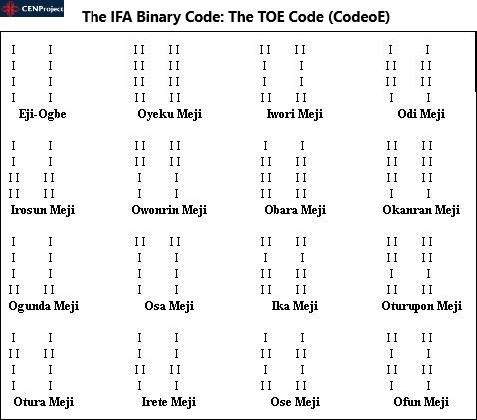
EquatoEs are general Tools of Ifa and Orisa used to model, analyze, study, unify, and integrate all fields mathematically in IFABOK.
Ebophobia
When looking at the sociocultural dimensions and other aspects of Ebo practices, ebophobia is the irrational fear of Ebo by many Africans and Yoruba people, especially the adherents of foreign religions, due to a range of factors, such as deep ignorance about African cultures and traditions (Isese), among other causes.
In Ebology (a multidisciplinary field that lies at the intersection/interjuncture of every field), Ebophobia is a key subject in Human-Orisa Interface/Interactions (HOI), just like Human-Computer Interface (HCI) is a multidisciplinary field at the intersection of computer science, psychology, and design.
Begin Your Journey Into Ebology Now
Discover the transformative power of energy exchange through Ebology. Engage with our resources to deepen your understanding and participate in this ancient yet evolving practice. Join us to unlock new dimensions of interaction with nature and spirit.
