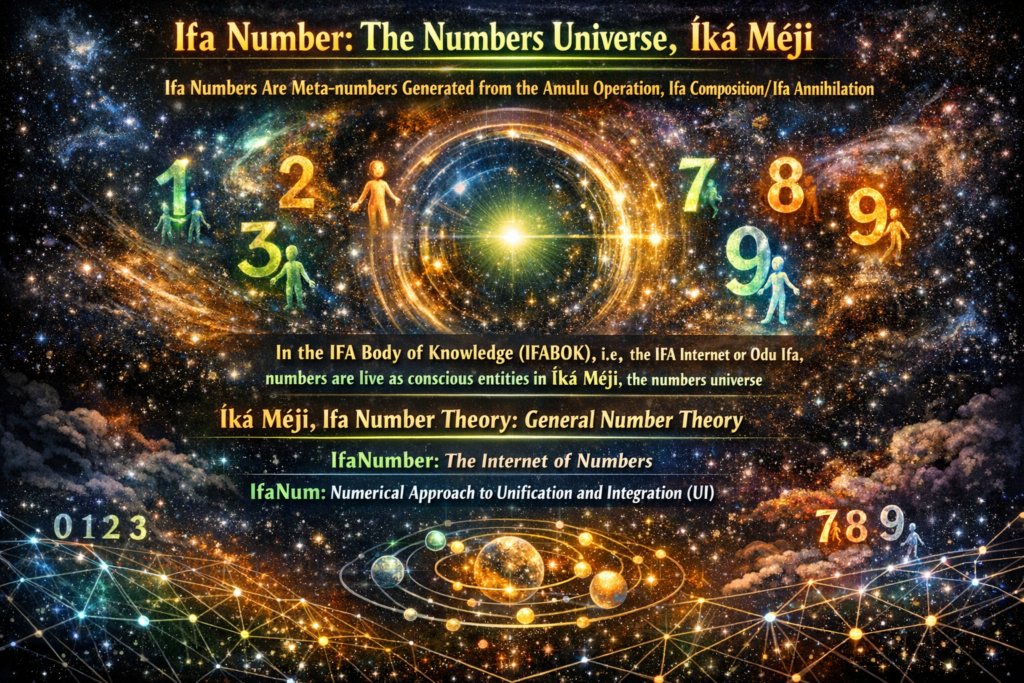
IfaNumber: ToENumber
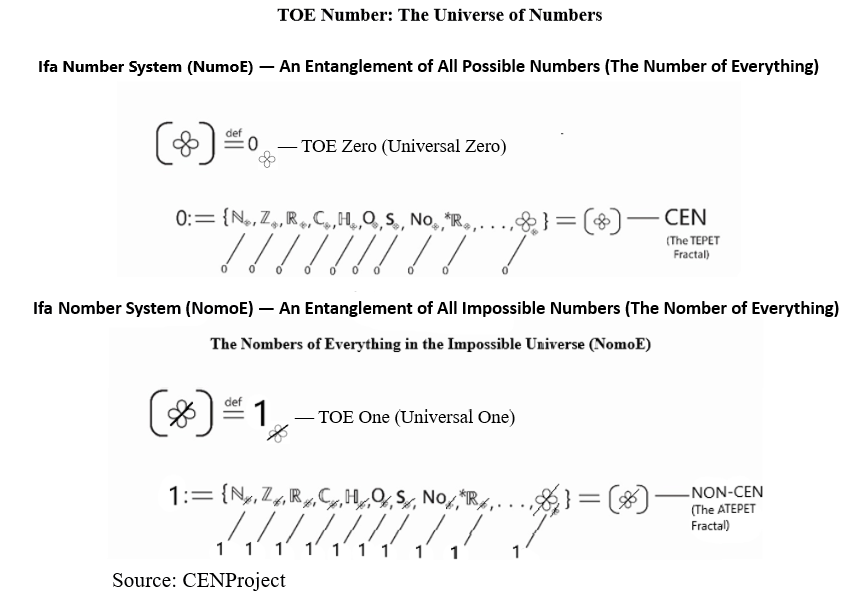
The Number of Everything (NumoE)
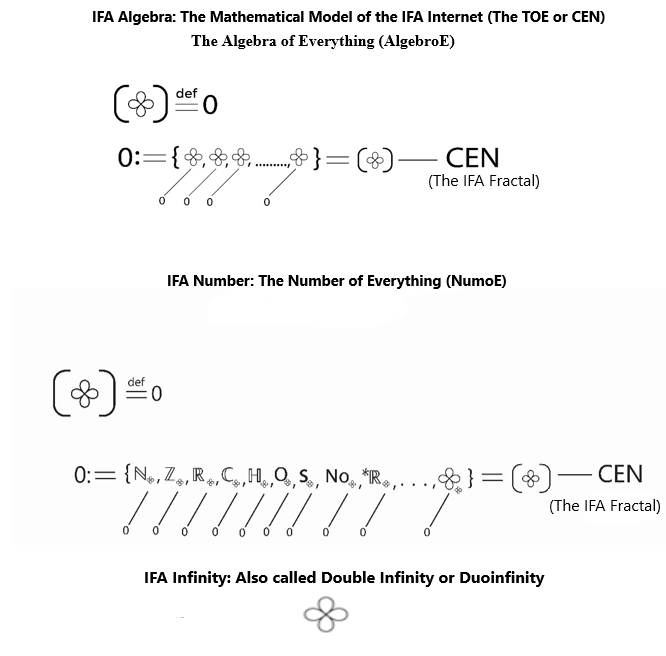
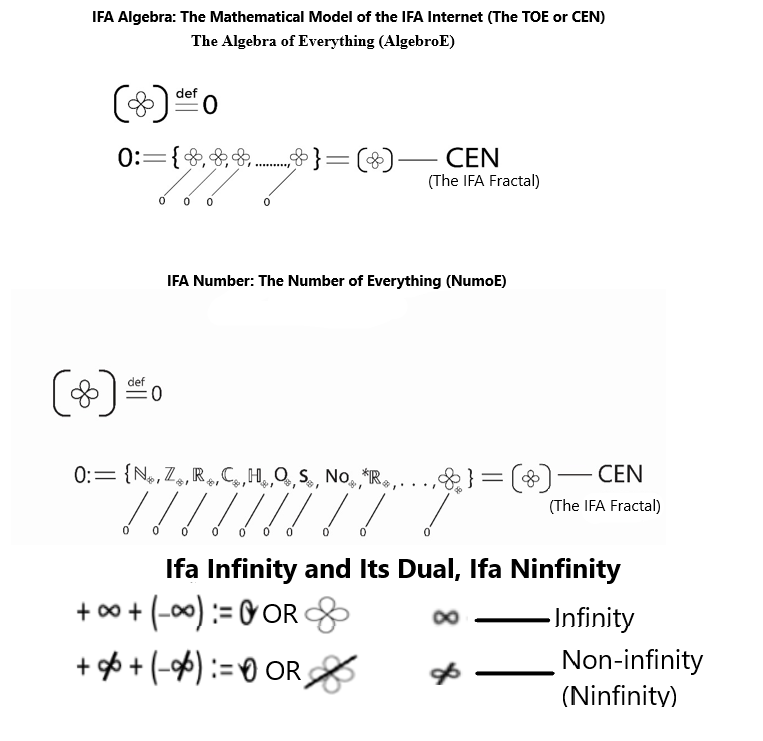
IFA Number is the container and fundamental building block of all kinds of numbers in Mathematics. It is the Number of Everything — CEN.
Ifa numbers (ifanums) embody the principles of mathematics and consciousness, shaping the foundation of energy, logic, and reality. Ifanums are elements (inhabitants) of the number universe known as IFA Number.
These universal meta-numbers are forms of Energy (CEN) and are used to encode information on all fields of knowledge in a holistic manner in the IFA Binary System of Education. They form the core of the IFA Internet, which is the Theory of Everything.
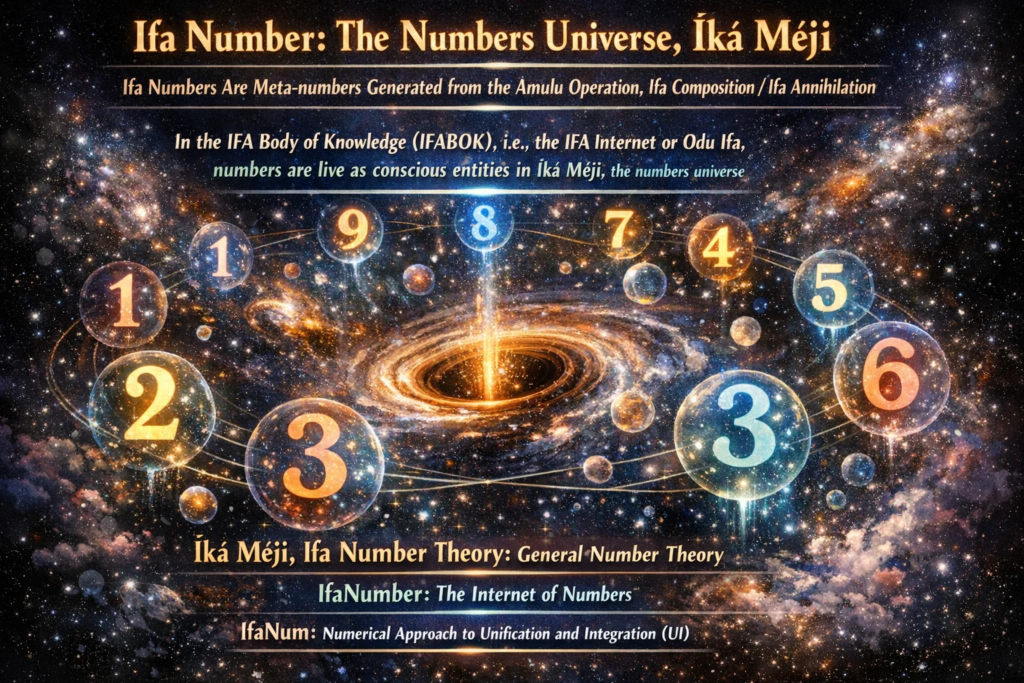
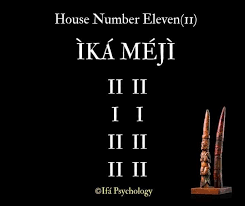
Explore the Number Universe, Ìká Méjì
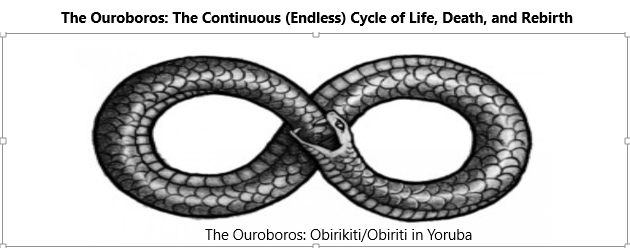
IFA Number is the Number of Everything, the underlying structure that weaves all known and unknown numbers together as One. The NumoE is also known TOENumber (TOENum), Consciousness Number, CENumber, Energy Number, Double Infinity, Duoinfinity, or Ifa Infinity.
Foundational Concepts
IFA Number is the Entanglement of all possible numbers forming the core of the TOE.
Advanced Applications
Explore cutting-edge methodologies and applications of Ifa numbers, the building block of the IFA Information Management System (the IFA Internet).
IfaNumber Theory: Number Theory in IfaLang
Number theory is a branch of pure mathematics focused on the properties, relationships, and behavior of integers (positive, negative, and whole numbers).
Often called “higher arithmetic,” it examines prime numbers, divisibility, and number patterns. Key topics include prime factorization, congruences, and diophantine equations, with applications in cryptography, computer science, and coding theory.
Core Aspects of Number Theory
- Study of Integers: Focuses on numbers like
, particularly natural numbers.
- Prime Numbers: Investigates the properties of primes, which are the building blocks of integers, and their distribution.
- Divisibility and Factors: Involves finding the Greatest Common Divisor (GCD), Lowest Common Multiple (LCM), and factorization.
- Modular Arithmetic: Studies relationships between numbers based on remainders, often called “clock arithmetic”.
Major Subfields
- Elementary Number Theory: Investigates integers using basic arithmetic methods.
- Analytic Number Theory: Uses techniques from calculus and complex analysis to solve problems regarding integers.
- Algebraic Number Theory: Generalizes the concept of numbers to algebraic integers.
- Geometric Number Theory (Geometry of Numbers): Uses geometric techniques to study numbers, often treating integers as lattice points in
-dimensional space. A central result is Minkowski’s theorem.
- Diophantine Geometry (Arithmetic Geometry): Connects algebraic geometry with number theory. It studies the rational or integer points on curves and surfaces (e.g., elliptic curves).
- Probabilistic Number Theory: Studies the distribution of numbers and arithmetic functions using methods from probability theory to show that number-theoretic properties often follow “random” patterns.
- Computational Number Theory (Algorithmic Number Theory): Focuses on the development of fast, efficient algorithms for solving number-theoretic problems on computers, such as primality testing and integer factorization.
- Transcendental Number Theory: Investigates numbers that are not roots of any polynomial equation with rational coefficients (e.g.,
and
).
Applications
- Cryptography: Number theory forms the basis of secure communication (e.g., RSA encryption), relying on the difficulty of factoring large numbers.
- Computer Science: Used in algorithm design, hash tables, and coding theory.
- Pattern Recognition: Identifies sequences like Fibonacci numbers.
Ifa Number Theory entails doing the field of number theory in Ifa Language (IfaLang).
The IFA Pair: Number & No-Number (Nomber)
The IFA Number and its dual, the IFA Nomber, form the IFA Pair representing all possible and impossible numbers. Also known as the Energy-Anergy Pair, this meta-structure in IFA Mathematics forms the backbone of the IFA Internet and is a vital tool for integrating all fields of knowledge.

Ifa Construction: ToE Construction, the Construction for Everything (ConstructionoE)
IfaConstruction simply means doing constructions in all fields, not only in Mathematics, using the 16 Energy-based Principles of Ifa known as the Oju Odu Ifa Merindinlogun in IfaLang for the Unification and Integeration of Everything (UIoE) on the IFA Internet, among other purposes.
It is also known as Ifa Construction, ToE Construction, Energy-based Construction, Consciousness Construction, or the Construction of Everything, ConstructionoE), and the key FunctoE (Function for Everything) in IfaLang is Ifa Construct, and Ifa Function that means the Construct for Everything (ConstructoE).
Using the ConstructoE to Generate Ifa numbers, the Ifa Operation of Amulu, Ifa Composition
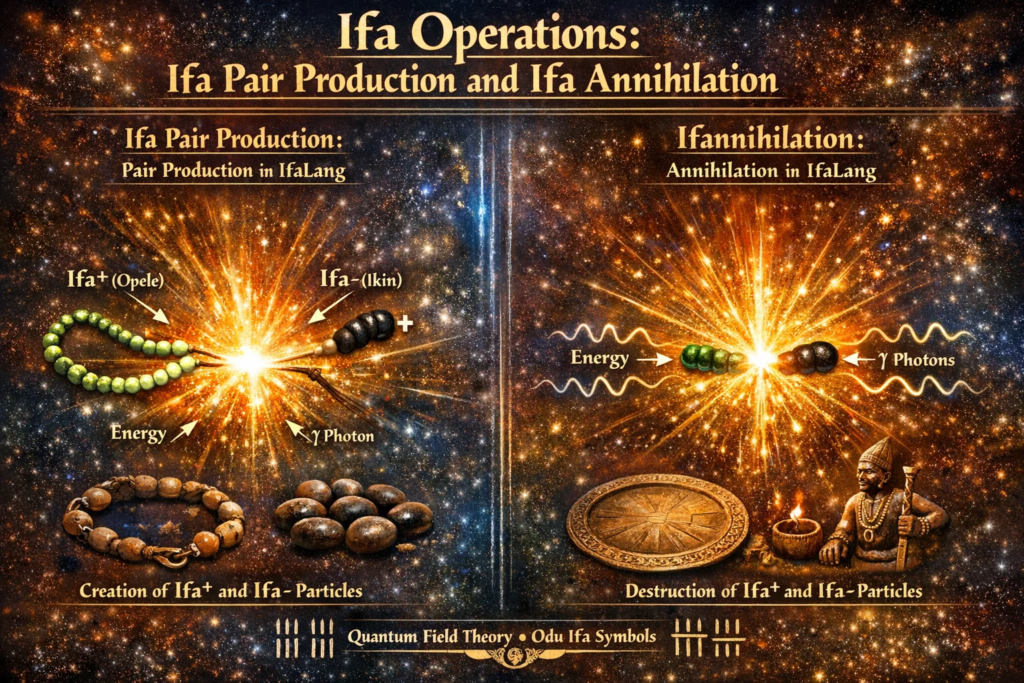
Ifa Composition in this context also means Ifa Annihilation. To understand this Ifa Operation and how it generates Ifa numbers, it is crucial to first discuss the physical processes of pair production and pair annihilation.
⚛️ Pair Production
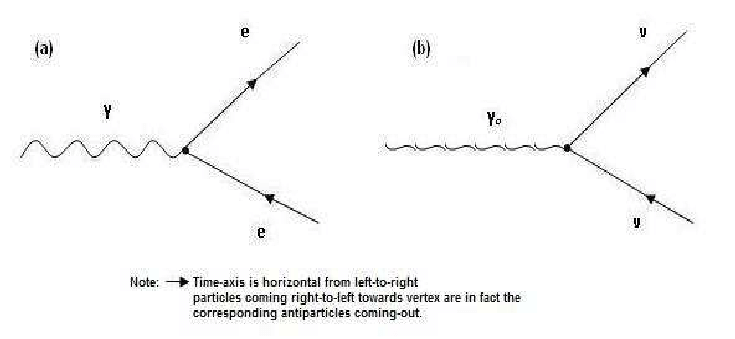
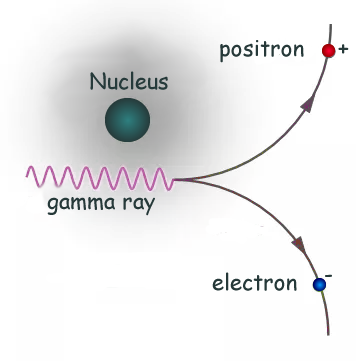

Pair production is a quantum process in which a high-energy photon (γ) transforms into a particle–antiparticle pair, most commonly:
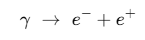
That is, a photon converts into an electron and its antiparticle, the positron.
🔹 1. Basic Idea
A photon has:
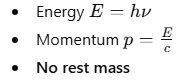
If the photon has enough energy, it can convert its energy into mass, according to:

So light becomes matter.
🔹 2. Energy Requirement (Threshold Energy)
To create an electron–positron pair:
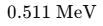
- Rest mass of electron = 0.511 MeV
- Need two of them

So the photon must have at least 1.022 MeV of energy.
In reality, it needs slightly more because of momentum conservation.
🔹 3. Why a Nucleus is Needed
A photon cannot produce a pair in empty space.
Why?
Because both:
- Energy and
- Momentum
must be conserved.
A nearby atomic nucleus absorbs some recoil momentum, making the process physically possible.

The nucleus stays intact but recoils slightly.
🔹 4. Matter–Antimatter Aspect
The positron is antimatter.
After being created, it typically meets an electron and undergoes:
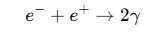
This is called annihilation, converting matter back into radiation.
Pair production and pair annihilation are reverse processes.
🔹 5. Where It Happens
Pair production occurs in:
- High-energy gamma rays near atomic nuclei
- Cosmic ray interactions in Earth’s atmosphere
- Near black holes and neutron stars
- Particle accelerators (e.g., CERN)
- Medical PET scans (positron emission tomography)
🔹 6. Relation to Quantum Field Theory
In quantum electrodynamics (QED):
- The photon is an excitation of the electromagnetic field.
- The electron and positron are excitations of the electron field.
- Pair production is a field interaction process, not just a particle splitting.
In Feynman diagram language:
- A photon line turns into an electron–positron loop near a nucleus.
🔹 7. Other Types of Pair Production
If energy is higher, other particle pairs can form:
- Muon–antimuon pairs
- Quark–antiquark pairs
- Even heavy boson pairs at very high energies
The required threshold energy increases with particle mass.
🔹 8. Conceptual Significance
Pair production shows:
- Energy can become matter
- Light can create particles
- Matter and antimatter symmetry
- The vacuum is not “empty” in quantum physics
It is one of the clearest experimental confirmations of:

originally formulated by Albert Einstein.
🔁 Reverse Pair Production (Pair Annihilation)
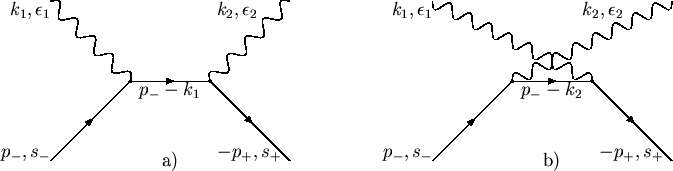
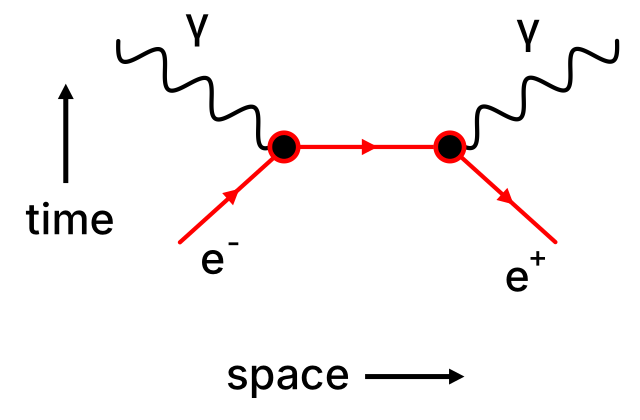
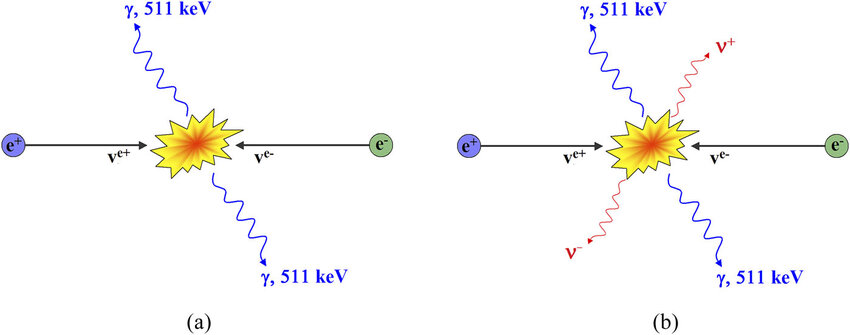
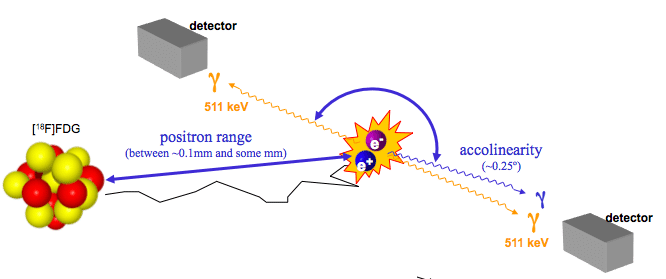
Reverse pair production is the process where a particle–antiparticle pair (usually an electron and positron) annihilate and convert back into photons:
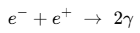
This is called electron–positron annihilation.
It is the exact inverse of pair production.
⚛️ 1. What Happens Physically?
- An electron meets a positron
- They have identical mass but opposite charge
- Their mass is converted entirely into electromagnetic radiation
Using:

Each particle has rest energy:
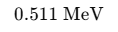
Total energy released:
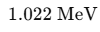
That energy appears as two gamma-ray photons, each with:
📐 2. Why Two Photons?
Momentum must be conserved.
If annihilation happens at rest:
- Total initial momentum = 0
- So two photons are emitted in opposite directions
- Their momenta cancel

Single-photon emission is forbidden (would violate momentum conservation).
🌌 3. Where It Occurs
🔬 Particle Accelerators
At facilities like CERN, high-energy electron–positron collisions are used to study fundamental forces.
🏥 Medical Imaging
In PET scans (Positron Emission Tomography):
- A radioactive tracer emits positrons
- Positrons annihilate with electrons
- Opposite gamma rays are detected
- A 3D image is reconstructed
🌠 Astrophysics
- Near black holes
- In gamma-ray bursts
- In cosmic ray interactions
The characteristic 511 keV gamma-ray line is a signature of annihilation in space.
🧠 4. Quantum Field Theory View
In quantum electrodynamics (QED):
- Electron field excitation + positron field excitation
- They annihilate into photon field excitations
In a Feynman diagram:
Two incoming fermion lines → two outgoing photon lines.
🔄 5. Higher-Energy Variations
If the electron and positron have extra kinetic energy:

Or at very high energies:

Example:
- Muon pairs
- Quark–antiquark pairs
This is how many particles were discovered experimentally.
⚖️ 6. Deep Symmetry
Pair production:
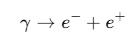
Pair Annihilation:
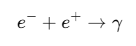
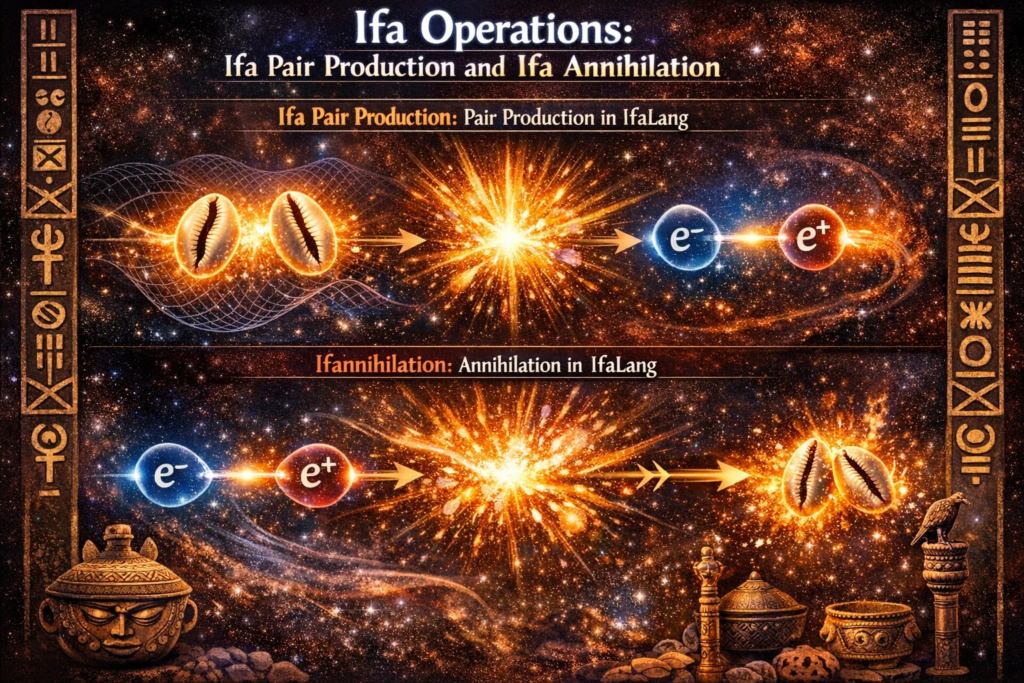
These processes (pair production and pair annihilation) reflect:
- Matter–energy equivalence
- CPT symmetry
- Vacuum fluctuation structure
They are mirror processes in spacetime.
🧭 7. Conceptual Insight
Reverse pair production shows:
- Matter is not fundamental — energy is.
- Particle identity is field excitation.
- The vacuum allows reversible transformation between radiation and matter.
Core Ifa Principle: Everything Is Energy and Energy Is Everything
In the IFA Body of Knowledge (IFABOK), also known as the Odu Ifa or the IFA Internet, the Energy called Ogbe (Vacuum, Consciousness, Nothing) is Everything that exists at the most fundamental level. This is the Ifa Theory of Everything (iTOE), the Universal TOE for all fields of knowledge.
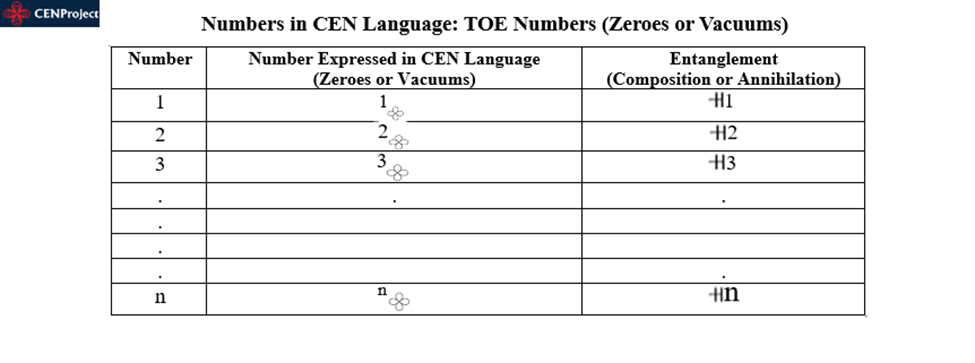
Even numbers are also forms of Energy (Energyforms) or states of Energy (Energystates).
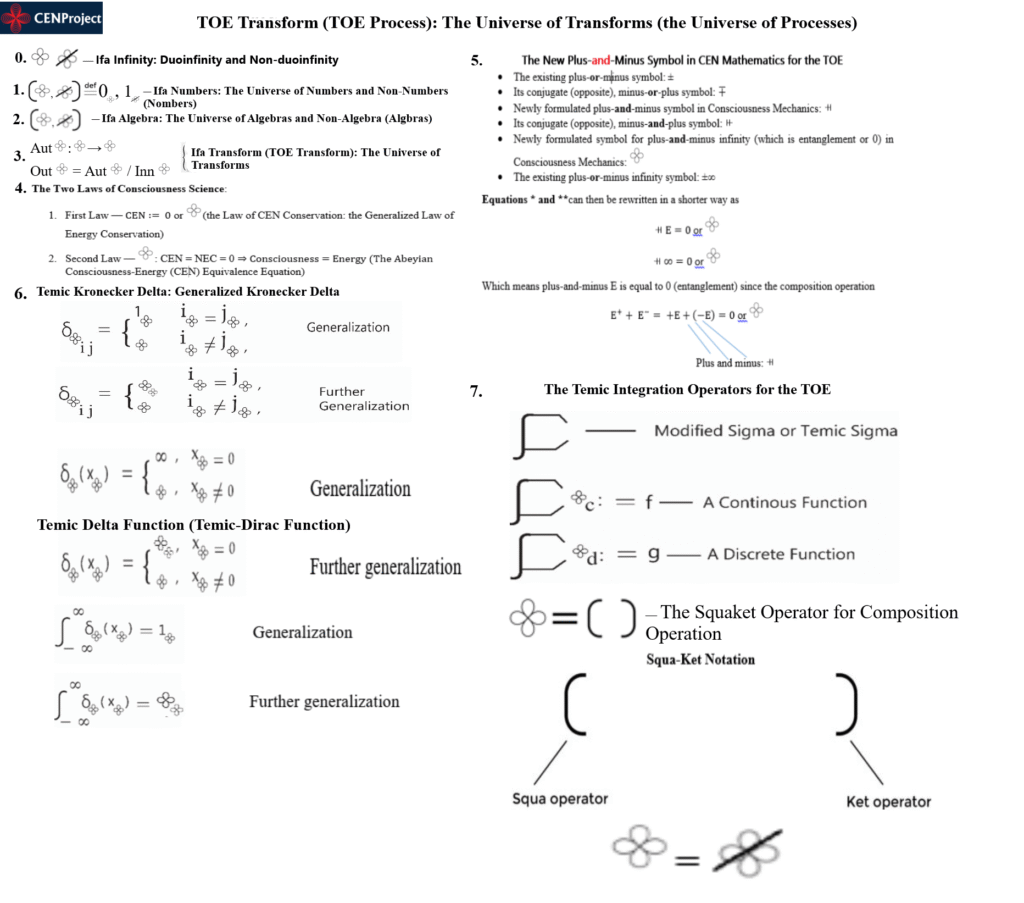
The Ifa Operation, Amulu (Ifa Composition), or Ifannihilation in this context, reveals all kinds of numbers as Energyforms, with the Energy of any number, n, computed (calculated) by combining it with its dual.
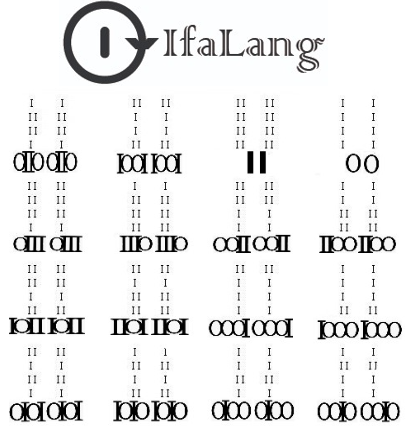
This is referred to as Ifa Pair Annihilation, with its dual, Ifa Pair Production, with both referred to as IfaConstructions:

Ifa Infinity: The Infinity of Everything (InfinitoE)
Infinity is one of the most profound and revolutionary ideas in the mathematical sciences. It reshaped mathematics in the 19th and 20th centuries and remains central to modern analysis, topology, logic, cosmology, and even theoretical physics.
Let’s develop it carefully and rigorously.
1. What Is Infinity in Mathematics?
In mathematics, infinity is not a number in the ordinary sense.
It is a concept that describes:
- Unbounded growth (e.g., 1, 2, 3, 4, …)
- Unending processes (e.g., infinite sums)
- Unbounded size (e.g., infinite sets)
- Limit behavior (e.g., limits in calculus)
There are two fundamentally different notions:
| Type | Meaning |
|---|---|
| Potential Infinity | A process that continues indefinitely |
| Actual Infinity | A completed infinite object |
The shift from potential to actual infinity was revolutionary in mathematics.
2. Infinity in Set Theory (Cardinal Infinity)
The modern mathematical theory of infinity begins with
Georg Cantor
Cantor showed something astonishing:
Not all infinities are equal.
2.1 Countable Infinity (ℵ₀)
The set of natural numbers:
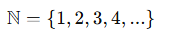
is infinite.
Its size is called:

Surprisingly:
- Integers are countable
- Rational numbers are countable
Even though rationals seem “denser,” they can still be listed.
This means:
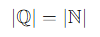
2.2 Uncountable Infinity
Now consider the real numbers.
Cantor proved:

This is shown via Cantor’s diagonal argument.
So we have:

Thus:
- There are infinitely many infinities.
- They form a hierarchy.
This leads to the famous:
The Continuum Hypothesis
Is there a set whose size lies strictly between ℵ₀ and the real numbers?
It was later shown (by Gödel and Cohen) that:
- It cannot be proven true or false within standard set theory.
3. Infinity in Calculus (Limits)
Infinity appears in calculus through limits.
When we write:
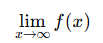
we do NOT mean x becomes a number called infinity.
We mean:
x grows without bound.
Example:
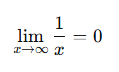
3.1 Infinite Series
Consider:

This infinite process converges to:
1
Thus:
- Infinite sums can be finite.
- Infinity does not automatically mean “large result.”
But:

diverges.
So infinite processes behave differently depending on structure.
4. Infinity in Analysis (Rigorous Foundations)
In real analysis, infinity is handled using:
- Limits
- Completeness of ℝ
- Metric spaces
- Topology
The infinite is controlled by precise ε–δ definitions.
Example:
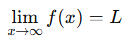
means:
For every ε > 0, there exists M such that:

Infinity here is not mystical — it is rigorously defined behavior.
5. Infinity in Topology
In topology, infinity appears in:
- Non-compact spaces
- One-point compactification
- Infinite-dimensional spaces
For example:

is infinite and non-compact.
By adding a point at infinity, we can transform it into a compact space.
This is central in:
- Algebraic topology
- Functional analysis
- Quantum field theory
6. Ordinal Infinity (Order Types)
Cardinals measure size.
Ordinals measure order.
The first infinite ordinal is:
ω
Then we have:

Ordinal arithmetic is NOT commutative:
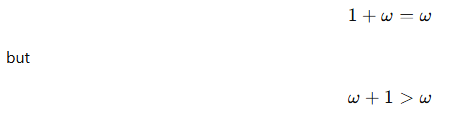
This reveals that infinity behaves structurally, not numerically.
7. Infinity in Measure Theory
In measure theory:
- A set can have infinite measure.
- Lebesgue integration handles infinite domains.
Example:
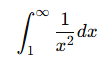
converges.
But:
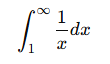
diverges.
Again:
Infinity depends on structure.
8. Infinity in Geometry
Euclidean Geometry
Lines extend infinitely.
Non-Euclidean Geometry
Infinite curvature spaces exist.
Projective Geometry
Infinity is formalized as a point at infinity.
9. Infinity in Algebra
- Infinite groups
- Infinite-dimensional vector spaces
- Hilbert spaces
- Infinite Galois extensions
Modern physics relies heavily on infinite-dimensional Hilbert spaces.
10. Infinity in Logic and Foundations
Kurt Gödel showed:
Any sufficiently strong formal system capable of arithmetic:
- Cannot prove all truths about infinity.
- Contains undecidable statements.
Infinity exposes the limits of reason.
11. Infinity in Probability
Infinite sample spaces:
- Continuous probability distributions
- Brownian motion
- Infinite stochastic processes
Probability theory depends on σ-algebras — infinite collections of sets.
12. Infinity in Modern Physics
Though physics is empirical, infinity appears in:
- Quantum field theory (divergences)
- Renormalization
- Black hole singularities
- Cosmological models
Some physicists argue infinities signal incomplete theory.
13. Different Symbols of Infinity
| Symbol | Meaning |
|---|---|
| ∞ | Unbounded |
| ℵ₀ | Countable infinity |
| ℵ₁, ℵ₂… | Higher cardinal infinities |
| ω | First infinite ordinal |
Ifa Infinity: The Unified and Fundamental Ontology of All Conceptions of Infinity
The Ontology of Infinity
To speak about infinity as ontology is to shift from mathematics (“how infinity behaves”) to metaphysics (“what infinity is in reality or being”). This is a deeper question:
Is infinity merely a concept we use, or does it have real existence?
Let’s explore the major ontological interpretations.
1. What Does “Ontology” Mean Here?
Ontology is the branch of philosophy that studies being, existence, and reality.
So “infinity as ontology” asks:
- Does infinity exist independently of thought?
- Is it a property of reality, or just a feature of language?
- Is infinity actual, or only potential?
2. Aristotle: Potential vs Actual Infinity
The classical starting point is Aristotle.
He made a crucial distinction:
Potential Infinity
- A process that never ends
- Example: counting 1, 2, 3, 4, …
- Infinity is never completed
Actual Infinity
- A completed infinite whole
- Example: “the set of all numbers”
Aristotle’s Position:
Only potential infinity exists in reality.
He rejected actual infinity as metaphysically problematic.
So for Aristotle:
- Infinity is a mode of becoming, not a completed being.
3. Cantor: Infinity as Real and Structured
In contrast, Georg Cantor argued:
Infinity is real, structured, and plural.
He introduced:
- Different sizes of infinity (ℵ₀, continuum, etc.)
- A hierarchy of infinite beings
Ontological claim:
- Infinite sets exist as completed objects.
- Infinity is part of mathematical reality.
Cantor even connected infinity to the divine:
- The Absolute Infinite → God
- Mathematical infinities → reflections of it
4. Infinity in Platonism
Mathematical Platonism says:
Mathematical objects exist independently of humans.
Under this view:
- Infinite sets exist in a non-physical realm
- Infinity is ontologically real but abstract
So:
- ℕ (natural numbers) exists
- ℝ (real numbers) exists
- Their infinity is not invented but discovered
5. Formalism: Infinity as Symbolic Fiction
In contrast, formalists (like David Hilbert) argue:
Infinity does not “exist” — it is a useful symbol in a formal system.
So:
- ∞ is like a tool
- Infinite sets are rules of manipulation, not real entities
Ontology here is minimal:
- Only symbols and rules exist
6. Constructivism: Infinity as Constructible Process
Constructivists reject actual infinity.
They argue:
- A mathematical object exists only if it can be constructed
Thus:
- Infinite totalities are suspicious
- Only potential infinity is acceptable
This is close to Aristotle again.
7. Infinity in Modern Physics: Ontological Tension
Physics introduces a different perspective.
We encounter infinity in:
- Singularities (black holes)
- Infinite space or time
- Quantum field divergences
But many physicists suspect:
Infinity may signal incomplete theory, not real existence.
So ontologically:
- Infinity might be an artifact of models, not reality itself
8. Infinity as Structural Ontology
A more modern view (inspired by category theory and structural realism):
Infinity is not a “thing” but a property of structures.
For example:
- A space is infinite if it has no boundary
- A sequence is infinite if it has no terminal element
So infinity is:
- Not an object
- But a mode of organization
9. Ontological Positions Compared
| View | Status of Infinity |
|---|---|
| Aristotle | Potential only |
| Cantor | Actual and real |
| Platonism | Abstract reality |
| Formalism | Symbolic fiction |
| Constructivism | Process only |
| Physics | Possibly non-physical artifact |
| Structuralism | Property of systems |
10. Infinity as Being vs Becoming
This is the deepest ontological divide:
Infinity as Being
- A completed, existing whole
- Example: the set of all real numbers
Infinity as Becoming
- An endless unfolding process
- Example: counting forever
This mirrors:
- Static vs dynamic reality
- Object vs process metaphysics
11. Infinity and the Absolute
Many philosophical traditions link infinity to the Absolute:
- In Western philosophy → God as infinite
- In metaphysics → infinite ground of being
Cantor explicitly made this link.
Infinity here becomes:
Not just mathematical, but ontological foundation
ToE Infinity: The Infinity for Everything (InfinitoE)
Across all views, a key idea emerges:
Infinity represents the transcendence of limitation.
It appears whenever:
- Boundaries disappear
- Processes do not terminate
- Structures cannot be completed finitely
Ifa Infinity extends infinity beyond the realms of Mathematics and Physics, generalizing it to all fields of knowledge at the foundational (ontological) level.
Begin Your Journey into the Worlds of Numbers
- Numerical Approach to UI
- Mathematical Frameworks
- Consciousness in Numbers
- Energy Patterns
- Grand Unified Theories (GUTs)